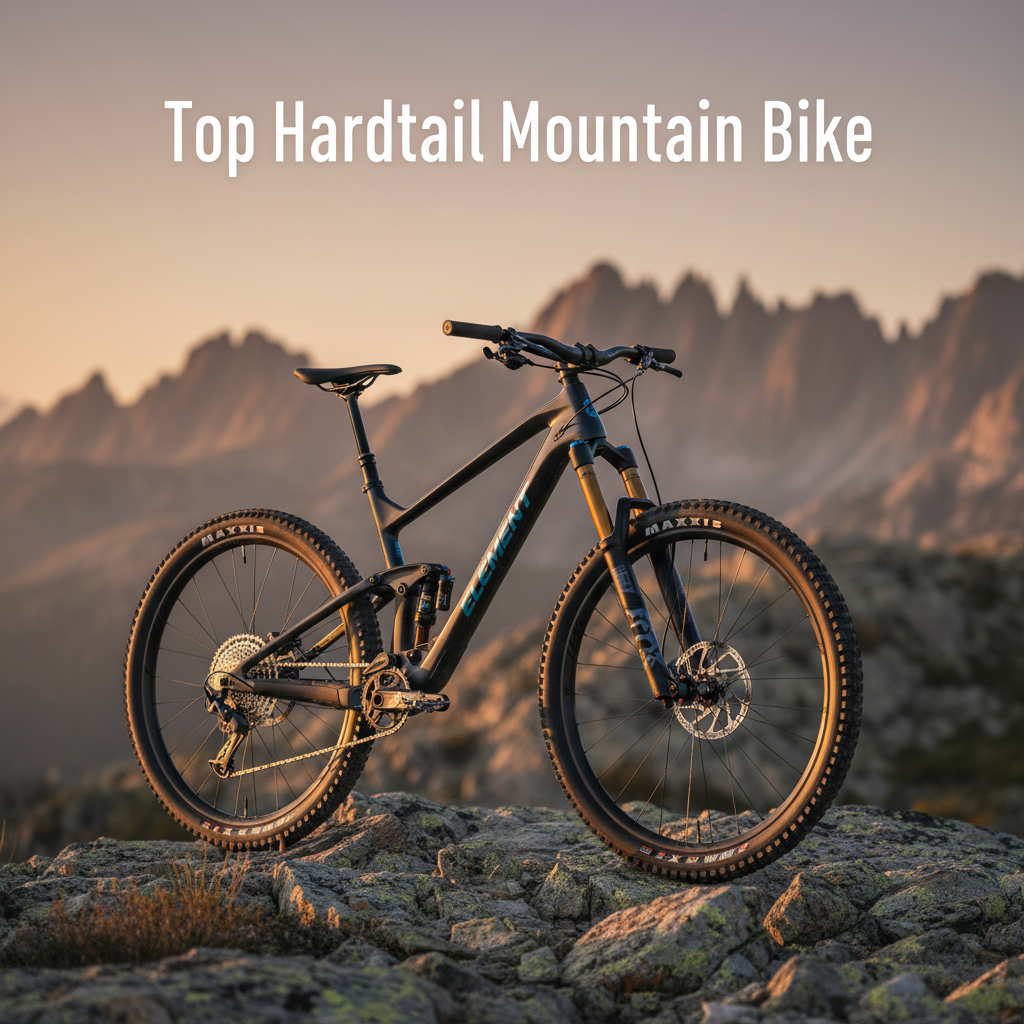
Quick Picks – Best Hardtail Mountain Bikes of 2026
Best Overall Hardtail Mountain Bike (2026)
Canyon Grand Canyon — A 2026 benchmark with a sub-2,000g alloy frame and a complete build at 12.7kg. Testers consistently rate its versatility, modern geometry, and adventure-ready mounting options. Ideal for riders seeking trail prowess and bikepacking capability in one package.
Best Value Hardtail Mountain Bike (2026)
Giant Talon 1 — Delivers remarkable trail performance at an entry-level price. The SXC-32-2 RL fork, air spring, and rebound adjustability win praise for precise steering and capability well above its price-point. Riders consistently cite its value as “rides like a bike that should cost more.”
Best for Beginners
Specialized Rockhopper Expert — Aluminum frame, progressive geometry, and dialed fork tuning make this a standout beginner’s hardtail. Offers a comfortable ride and forgiving handling, winning long-term user loyalty for those discovering trail riding.
Best for XC Racing
Canyon Exceed CF7 — Blending lightweight carbon (1,000–1,200g frames) with precision handling, the Exceed CF7 is purpose-built for competitive XC. Repeatedly confirmed in industry tests for its climbing prowess, racing efficiency, and modern features.
Best for Trail Riding
Rocky Mountain Growler 50 — 6061 alloy, 29in wheels, and 2.6in tire clearance define the Growler’s “aggressive fun.” Its progressive geometry and trail-oriented kit excel on rugged descents and technical terrain, described as “confidence inspiring” in real world tests.
What’s New in Hardtail Mountain Bikes for 2026?
Advances in Frame Materials & Geometry
2026 has brought sub-2,000g alloy frames and superlight carbon (e.g., Mondraker Podium RR at 775g, Scott Scale at 1,870g). Carbon dominates high-end, offering best-in-class vibration damping and compliance without weight penalty. Modern hardtails sport slack (66.7°–68.5°) head angles, increased reach (up to 463mm), and longer wheelbases for trail stability and XC speed, along with adjustable geometry: for example, Scott’s headset flips +/-0.6°. Triple-triangle and dropped stays filter vibration, boosting descending confidence and rider comfort.
Latest Drivetrain & Suspension Technologies
1x drivetrains are universal, led by SRAM AXS wireless and Shimano Deore for budget builds. Suspension forks range from 100–140mm; lightweight race bikes spec RockShox SID SL or rigid carbon forks like Orbea’s 550g Spirit, while trail hardtails sport Marzocchi Bomber Z2, Suntour XCR 32, or Giant Crest 34 for greater small-bump compliance and bigger-hit ramp-up. Thru-axles and internal dropper routing are standard.
Integration of Electronic Shifting & Smart Features
Most 2026 hardtails now offer wireless shifting (SRAM X01 AXS, Shimano XT Di2) and integrated Quarq power meters at the top end. Full e-bike systems remain rare in this class as riders prioritize mechanical lightness and trail feel. Dropper posts are standard on most mid to top-tier builds.
Sustainability: Eco-Friendly Models & Practices
Steel frames, as seen in the Mason RAW Deore XT and Fairlight Holt XT, offer smooth rides and are recyclable with long product life. While explicit eco-certifications remain uncommon, steel and alloy bikes tend to require lower-energy manufacturing and are favored by bikepackers for durability and reparability, aligning with a more sustainable cycling ethos.
Top 10 Hardtail Mountain Bikes of 2026
1. Canyon Grand Canyon
- Key Features: Alloy <2,000g frame, versatile mounts, modern geometry, 12.7kg complete
- Pros: Touring/trail versatility, adventure-ready mounts, excellent value
- Cons: Alloy not as compliant as carbon at this price
- Who It’s For: Riders seeking a do-everything hardtail, from trail to bikepacking.
2. Giant Talon 1
- Key Features: SXC-32-2 RL fork (100mm), 1x drivetrain, aluminum frame
- Pros: Standout value, reliable, easy for beginners
- Cons: Entry-level groupset, less aggressive geometry
- Who It’s For: Budget-conscious and beginner riders wanting a capable starter bike.
3. Specialized Rockhopper Expert
- Key Features: Progressive alloy frame, well-tuned fork
- Pros: Easy handling, comfort, mainstream support
- Cons: Not the lightest; upgrade needed for tough trails
- Who It’s For: Beginners needing confidence and comfort on moderate terrain.
4. Canyon Exceed CF7
- Key Features: Lightweight carbon frame, race-proven geometry
- Pros: XC race speed, precise and stable
- Cons: Stiff for rough trails, price
- Who It’s For: High-performance racers and competitive XC riders.
5. Rocky Mountain Growler 50
- Key Features: 6061 alloy, 29-inch wheels, aggressive geo for descending
- Pros: Excellent on technical/trail descents
- Cons: Weightier than XC race frames
- Who It’s For: Aggressive trail riders and technical descent enthusiasts.
6. Rose Bonero 3
- Key Features: 12.6kg, versatility for bikepacking/trails, multiple mounts
- Pros: Downhill capable, nimble feel
- Cons: Stock wheels/brakes limit performance over hardest terrain
- Who It’s For: Trail/tour riders wanting downhill prowess and flexibility.
7. Mason RAW Deore XT
- Key Features: Steel frame, Deore XT, smooth/comfortable
- Pros: Ride comfort, eco-friendly, long-lasting
- Cons: Heavy, price (£4,800 tested)
- Who It’s For: Endurance tourers, adventure riders valuing comfort/eco.
8. Marin Bobcat Trail 5
- Key Features: Alloy frame, Suntour XCR 32 (120mm), Shimano Deore 1×11
- Pros: Progressive geo, great spec for price (£985/$999)
- Cons: Coil fork harder to tune, low-end brakes/wheels
- Who It’s For: Entry-level trail riders seeking fun/trail progression.
9. Scott Scale HMX SL
- Key Features: Carbon (1,870g), adjustable headset
- Pros: Sub-10kg potential, race proven
- Cons: Steep price, race-oriented
- Who It’s For: Elite and aspirational XC competitors.
10. Bike Ahead The Frame
- Key Features: Carbon under 900g, wireless shifting, Quarq power meter
- Pros: Ultralight, pro-level tech
- Cons: Price (€6,499), less versatile
- Who It’s For: Lightweight “weight weenie” racers and tech-focused riders.
Comparative Hardtail Mountain Bike Specs Table (2026)
| Model | Frame (Material/Weight) | Wheel Size | Drive System | Suspension | Sustainability | Price (Tested) |
|---|---|---|---|---|---|---|
| Canyon Grand Canyon | Alloy/ <2,000g | 29″ | Shimano 1×12 | 120mm, air | Alloy, long lifespan | ~£1,500 |
| Giant Talon 1 | Aluminum | 29″ | Shimano 1×10 | 100mm, air | Recyclable alloy | ~$950 |
| Specialized Rockhopper Expert | Aluminum | 27.5”/29” opt. | Shimano 1×11 | 100mm, air | Alloy | ~$1,300 |
| Canyon Exceed CF7 | Carbon/1,000–1,200g | 29″ | SRAM/ Shimano 1×12 | 100mm, air | Durable, repairable carbon | ~£2,899 |
| Rocky Mountain Growler 50 | 6061 Alloy | 29″ | Shimano 1×12 | 140mm, air | Alloy | ~$2,000 |
| Rose Bonero 3 | Aluminum/12.6kg | 29″ | SRAM 1×12 | 120mm | Alloy | ~€2,000 |
| Mason RAW Deore XT | Steel | 29″ | Shimano 1×12 | 120mm | Steel, eco-friendly | £4,800 |
| Marin Bobcat Trail 5 | Aluminum | 29″ | Shimano Deore 1×11 | 120mm, coil | Alloy | £985 |
| Scott Scale HMX SL | Carbon/1,870g | 29″ | SRAM X01 AXS | 100mm, air | Carbon | ~£6,000 |
| Bike Ahead The Frame | Carbon/900g | 29″ | SRAM AXS, Quarq | Rigid or 100mm | Carbon | €6,499 |
How to Choose the Right Hardtail Mountain Bike for You (2026)
Fit, Geometry & Riding Style
Focus on sizing for reach and stack—longer reach, lower stack suits aggressive riders; more upright fits offer comfort. Progressive slacker geometry gives more stability for descents, while traditional XC angles suit climbing and agile handling for race day. Always test ride if possible.
Trail, XC, or All-Around: Defining Your Needs
Match fork travel and frame features to how and where you’ll ride: 80–120mm for XC, 120–140mm for challenging trails. Look for bikes with versatile mounts and wheel size options if you plan to adapt the bike for different uses, such as touring or bikepacking.
Future-Proof Features to Look For
- Wireless electronic shifting (SRAM AXS, Shimano Di2 in mid/high-end)
- Dropper seat-post compatibility (essential for varied terrain)
- Mounts for racks/bags/bottles
- Through-axles and robust internal cable routing
Prioritize carbon frames for racers (1–2kg range), alloy for general use and toughness, and steel for comfort and sustainability.
Ownership Insights from Real Riders
User Reviews & Long-Term Impressions (2026 Updates)
- Canyon Grand Canyon: Praised for “versatility on all terrain and excellent bikepacking capability.”
- Giant Talon: “Exceeded expectations for a budget bike, excellent on twisty singletrack.”
- Rose Bonero: “Superb fun—nimble on technical trails but can handle fully loaded long days.”
- Scott Scale: “Responsive and precise, but demands an experienced rider.”
Common Maintenance & Upgrade Tips
- Regularly tune air-forks for your weight and trail type; adjust rebound to personal preference.
- Upgrade brakes to improve downhill confidence (e.g., Shimano MT200 on budget XC bikes).
- Check for serviceable bottom brackets—press-fit designs are harder for home mechanics.
- Consider wheel and tire upgrades for tackling chunkier terrain or reducing bike weight.
Frequently Asked Questions About Hardtail Mountain Bikes 2026
- How do hardtails compare to full-suspension bikes? Hardtails are lighter, more efficient climbers, and offer more value per dollar; full-suspension is superior for managing technical descents & rider fatigue.
- What fork travel is best? 80–120mm for XC/smooth trails; 130–150mm for technical/trail use. Choose based on primary terrain.
- Which is better: carbon, alloy, or steel? Carbon = lightweight & race-focused, alloy = value/durability, steel = compliance & eco-friendliness.
- Are electronic features worth it? Wireless shifting and power meters bring high-end precision but are not essential for recreational riders.
- What’s the ideal wheel size? 29” dominates for speed & rollover in all segments; 27.5” found on small/medium frames for shorter riders.
Ready to go deeper? Explore full product specs, find the latest deals, and read more owner reviews via trusted partners: Comprehensive Buyer’s Guide | Expert Reviews | Trail Bike Comparisons.
Don’t miss out: Check availability and best prices now — popular models like the Grand Canyon and Rose Bonero often sell out early in the season!