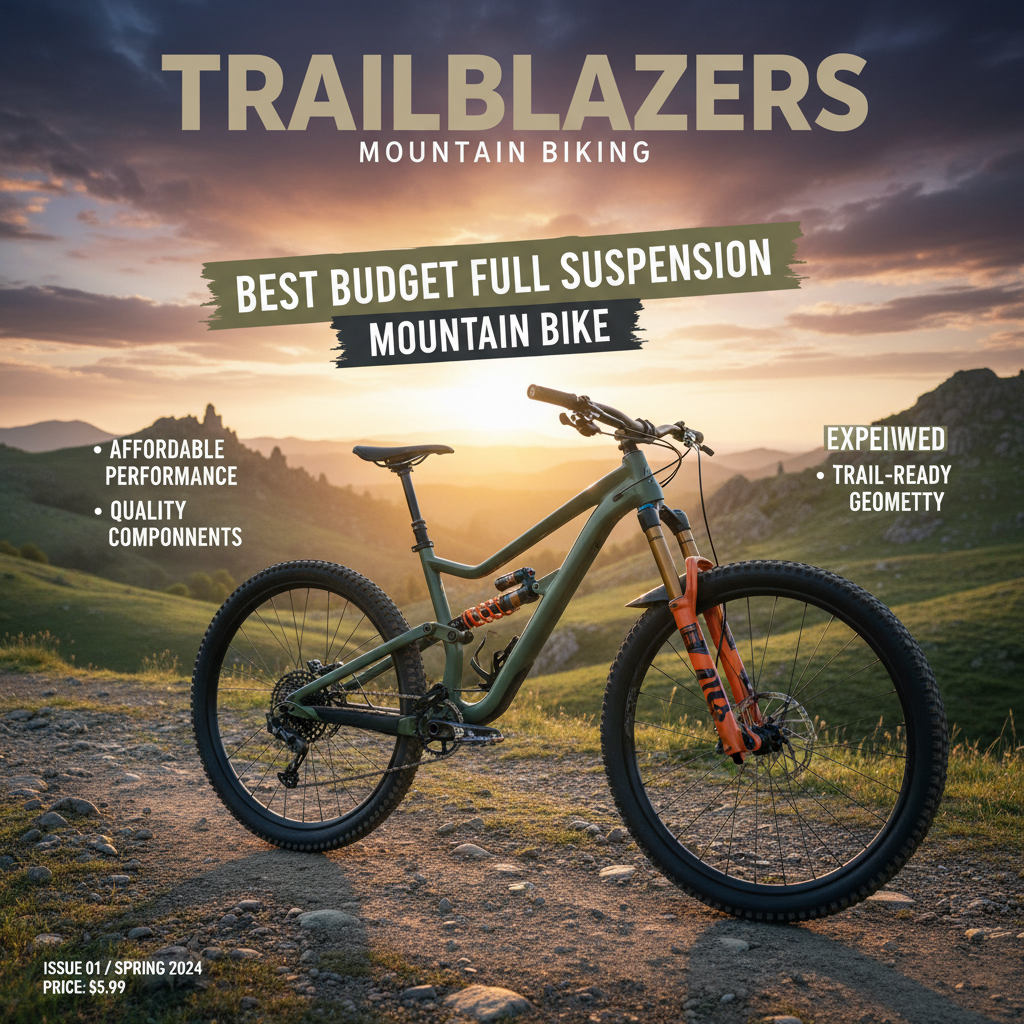
Quick Recommendations – Best Budget Full Suspension Mountain Bikes (2026)
Best Overall Value
Norco Fluid FS 4: With modern progressive geometry, a burly build, and a rare long-travel dropper in this price range, the Norco Fluid FS 4 excels in capability and confidence, especially on rough terrain.
Shop Norco Fluid FS 4
Best for Beginners
Trek Marlin 7: Designed for new riders, this bike pairs reliability with value. Its lightweight alloy frame and easy-to-set suspension inspire confidence on moderate trails.
See Trek Marlin 7 details
Best for Trail Performance
Polygon Siskiu T8: All-mountain geometry, trail-specific 140mm travel, and 12-speed Deore drivetrain make the T8 a benchmark in aggressive trail riding under $2,500.
Compare Polygon Siskiu T8
Best Women-Friendly Design
Liv Embolden 2: XS/S sizing, lighter springs, and narrower cockpit suit women and shorter riders, delivering nimble handling and confidence.
Best for Taller & Heavier Riders
Giant Reign 29 1: XL/XXL sizing, 130mm+ travel, and robust alloy frames suit taller riders (up to 6’5″/300 lbs) needing durability and stability.
Shop Giant Reign
What Makes a Full Suspension Mountain Bike “Best Budget” in 2026?
Defining the Budget Range: How Much Should You Spend in 2026?
For 2026, budget full-suspension MTBs fall between $1,500 and $3,000. Models below $1,500 typically make major compromises in suspension and component quality. Direct-to-consumer (DTC) brands like Polygon, Marin, and Fezzari offer exceptional value, especially during holiday sales where prices dip further.
Essential Features to Look For at This Price Point
- Frame: Aluminum alloy with modern trail geometry (64–66° head angle, 440–480 mm reach).
- Suspension: Air or coil shocks with 100–140 mm travel front/rear.
- Wheels/Tires: 27.5- or 29-inch wheels; tubeless-compatible rims; trail/all-mountain tires.
- Drivetrain: Shimano Deore or SRAM SX/NX 10–12-speed; 1x setups preferred for simplicity and range.
- Brakes: Hydraulic disc brakes (180/160 mm rotors minimum).
- Dropper Post: Increasingly available on bikes above $1,800 for trail versatility.
2026 Trends: New Technologies, Frame Materials, and Suspension Advances
- DTC Dominance: Lower prices with better components via online/direct sales.
- Trickle-Down Tech: Air-sprung forks, bearing-pivoted levers & flip chips for geometry adjustment now appear on sub-$3k bikes.
- 29er Standardization: More mid-size and entry-level bikes use 29-inch wheels for better rollover and efficiency.
- Light e-MTBs: Budget-friendly mid-drive systems (Fazua Ride 60, Bosch Performance Line CX) in e-MTBs under $4k.
Top 7 Best Budget Full Suspension Mountain Bikes in 2026
Model 1: Norco Fluid FS 4
Key Specs
- 29″ wheels
- 36 lbs 2 oz (XL tubeless)
- Modern progressive geometry
- Long-travel dropper post
Pros & Cons
- Pros: Confidence-inspiring on aggressive terrain, stable at speed, rare dropper at this price.
- Cons: Heavy, noisy rear hub, no climb switch on rear shock.
Best For (Rider Profile)
Riders prioritizing aggressive trails, modern geometry, and downhill focus.
Model 2: Trek Marlin 7
Key Specs
- 29″ wheels, 120mm travel (front/rear)
- Aluminum frame
- RockShox suspension, Shimano Deore 10-speed
Pros & Cons
- Pros: Lightweight, easy-to-maintain, affordable entry-level.
- Cons: Basic brakes/gearset, limited advanced features.
Best For (Rider Profile)
New riders, moderate trail use, best value starter full suspension.
Model 3: Polygon Siskiu T8
Key Specs
- Aluminum, modern geometry, 140mm travel
- Sram SX/Deore 12-speed
- Upgradable cockpit
Pros & Cons
- Pros: Aggressive trail spec, available dropper, tubeless-ready wheels.
- Cons: Limited color choices, DTC-only purchase (may need assembly).
Best For (Rider Profile)
Trail riders seeking the best performance-to-price ratio.
Model 4: Scott Ransom 26
Key Specs
- 26″ wheels
- 140mm front / 130mm rear travel
- Shimano Deore brakes, 11-51 cassette, 80mm dropper
- Weighs 25–29 lbs
Pros & Cons
- Pros: Value, multiple wheel sizes, strong drive components.
- Cons: Less suited for larger riders, limited tech innovation.
Best For (Rider Profile)
Smaller or youth riders; value-focused shoppers.
Model 5: Liv Embolden 2
Key Specs
- XS/S frame options
- 120mm travel
- Women-tuned contact points
Pros & Cons
- Pros: Custom geometry for women, plush suspension for lighter riders.
- Cons: Limited aggressive geometry, premium price for size-specific design.
Best For (Rider Profile)
Women, teens, and small-framed riders prioritizing comfort and confidence.
Model 6: Giant Reign 29 1
Key Specs
- XL/XXL frame
- 130mm+ travel
- All-mountain alloy construction
Pros & Cons
- Pros: Big frame sizes, robust, suitable for heavy/tall riders.
- Cons: Weight, price at higher end of “budget”.
Best For (Rider Profile)
Tall or heavy riders seeking reliability and fit.
Model 7: Fezzari Cascade Peak
Key Specs
- 29″ wheels
- Mid-travel (130mm front/120mm rear)
- SRAM NX/Deore 12-speed options
Pros & Cons
- Pros: Great value, upgrade-friendly frame.
- Cons: Direct-to-consumer only, limited colorways.
Best For (Rider Profile)
All-around trail and cross-country use; riders desiring future upgrades.
Real-World Rider Profiles: Which Budget Full Suspension Bike Fits You Best?
Best Bikes for Beginners & Occasional Riders
- Trek Marlin 7: Easiest to maintain, forgiving ride, solid entry-level specs.
Best for Women and Youth Riders (Fit and Comfort)
- Liv Embolden 2, Scott Ransom 26: Lighter springs, proper standover, and shorter cranks make these ideal.
Best for Taller, Heavier, and Aggressive Riders
- Giant Reign 29 1, Norco Fluid FS 4: Robust frames, longer reach, and 29″ wheels handle big riders and rough trails.
Everyday Commuters and Multi-Use Cyclists
- Polygon Siskiu T8: Efficient pedaling, dropper-compatible for mixed city/trail routes.
Value Over Time: Cost of Ownership and Resale Considerations
Upfront Costs vs. Long-Term Value
Expect to spend $1,500–$2,500 on a capable DTC full-suspension model. After initial purchase, budget $300–$800 yearly for maintenance (tires, brake pads, suspension service).
Maintenance, Parts, and Common Expenses
- Tires: $60–$160 every 1–2 seasons
- Drivetrain: $100–$300 annual replacement
- Brake pads: $20–$100 yearly
- Annual tune-up: $200–$400
Resale Value and Brand Reliability in 2026
Direct-to-consumer bikes like the Polygon Siskiu typically retain 50–70% of value after 1–2 years, outperforming most entry-level retail models.
How to Choose the Right Budget Full Suspension Mountain Bike (2026 Edition)
Geometry, Fit & Sizing Explained
- XS–XXL frame sizes tied to height/inseam. 2–4″ standover clearance ideal.
- Modern trail geometry: 65–66° head angle, 76–78° seat angle, 440–480 mm reach (see manufacturer charts).
| Rider Height | Inseam | Frame Size | Notes |
|---|---|---|---|
| 5’3–5’6″ | 30–31″ | S | Nimble, common women/youth fit |
| 5’6–5’10” | 31–33″ | M | Versatile, most riders |
| 5’10–6’1″ | 33–34″ | L | Stability for heavier/taller |
| 6’1–6’4″+ | 34–36″+ | XL/XXL | Extra reach/stiffness |
Suspension Technology: What Matters Most on a Budget
- 100–140 mm travel best for trail/all-mountain.
- Air springs allow fine-tuning for rider weight; entry-level shocks with external rebound preferred.
- Check for suspension lockout or climb switch for efficiency.
Questions to Ask in the Bike Shop or Online
- What’s the standover, reach, and head angle geometry?
- Are the wheels/tire tubeless-ready?
- Does the price include pedals or dropper post?
- What is the warranty on frame and suspension?
Expert Tips: Maximizing Performance & Longevity on a Budget Bike
Set-Up and Tuning Advice
- Set suspension sag to 25–30% of rear travel; tune preload for weight.
- Readjust tire pressure (20–25 PSI tubeless) for terrain and rider mass.
- Align cockpit for personal fit: consider shorter stems (35–50mm), wide handlebars (760–800mm).
Affordable Upgrades with Biggest Impact
- Convert wheels to tubeless for improved puncture resistance and grip.
- Upgrade stock tires to modern trail compounds.
- Add or upgrade dropper post for technical descent control.
- Install a more comfortable saddle for endurance.
Maintenance Basics for Budget-Minded Riders
- Clean and lube drivetrain weekly.
- Check/tighten all bolts monthly (torque to specs).
- Service suspension every 50-100 hours of riding.
- Bled brakes annually and replace pads when required.
Warranty, Customer Support, and After-Sale Service: What to Expect in 2026
Reputable brands now offer at least a 2-year frame warranty and 1-year suspension/component warranty. Direct-to-consumer and large retailers provide online support, video guides, and reliable parts shipping. Check terms before purchase. Polygon, Giant, and Trek routinely rank highest for after-sales support in budget categories.
FAQ: Common Questions About Budget Full Suspension Mountain Bikes (2026)
- Can I get a good full suspension bike under $1,000? For true trail performance, budget at least $1,500 for durable, serviceable suspension and brakes.
- Are budget full suspension bikes good for beginners? Yes—models like Trek Marlin 7 or Polygon Siskiu combine confidence-inspiring geometry with forgiving suspension.
- How long will a budget full suspension bike last? With annual maintenance, expect at least 3–5 years of reliable trail use.
- Can I upgrade wheels and suspension later? Most DTC frames accept wheel/tire or component upgrades.
Resources & Where to Buy: Best Online & Local Retailers in 2026
- Jenson USA – Trusted for Polygon, Norco, Marin, and Fezzari.
- Bicycle Warehouse – Giant, Liv, Trek, Specialized.
- Outdoor Gear Lab – In-depth, data-driven reviews.
- Local shops: Supporting area bike stores ensures fitting, assembly, and local warranty support.
Ready to ride? Research your top picks, test fit in person, and act fast on sales for the best 2026 value!