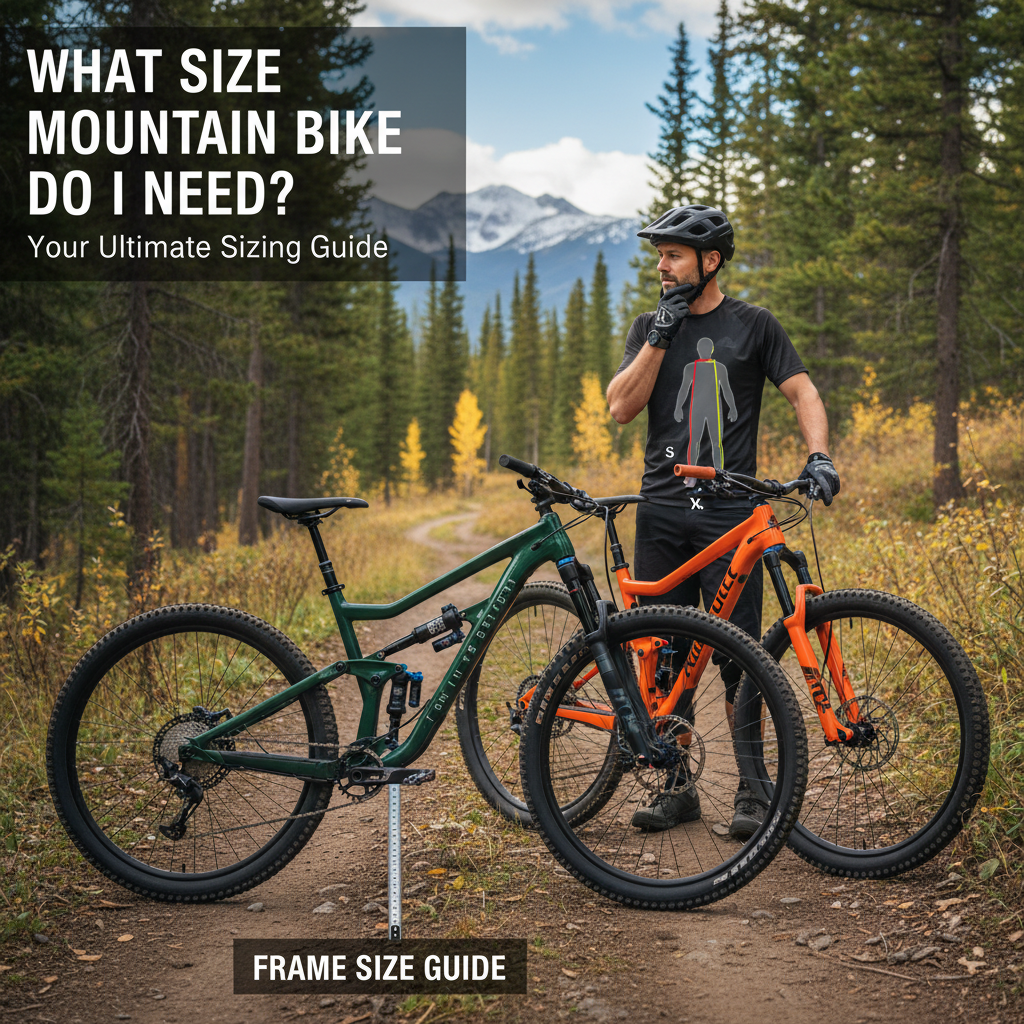
Quick Picks – Best Mountain Bike Sizes for Every Rider in 2026
Best Overall Fit: Most Versatile Mountain Bike Size
For riders between 5’6″ and 5’10” (168–178 cm) with an inseam of 32–34″ (81–86 cm), a Medium (M) frame, typically 17–18″ (43–47 cm), fits most terrain and styles. This size provides balanced reach (430–450 mm), ample standover (70–72 cm), and works for the widest segment of adult riders. Top brands (Canyon, Trek, Rocky Mountain) recommend this as the most versatile choice for cross-country, trail, and enduro in 2026.
Check latest pricing and availability
Best for Shorter Riders: Top Size & Geometry Recommendations
Riders from 4’10” to 5’5″ (148–165 cm) should select Extra Small (XS) or Small (S) frames (13–15″, 33–38 cm) with lower standover heights (27–28″, 69–71 cm). Brands like Santa Cruz and Rocky Mountain offer frames with short reach and stack, and 27.5″ wheels to ensure comfort and control. For technical trails, prioritize frames with standover clearance 2–5 cm below inseam and shorter top tubes.
Best for Taller Riders: Best Sizing Choices
Those 6’1″ and above (185+ cm, inseam 91+ cm) should target Large (L) to XXL frames (21–23″, 53–58+ cm). Look for bikes with reach >480 mm, stack >630 mm, and 29″ wheels for stability and control. Santa Cruz and Rocky Mountain recommend XXL frames for up to 203 cm (6’8″). These sizes enhance high-speed stability and minimize cramped cockpits.
Best for Youth & Kids: Recommended Mountain Bike Sizes
Youth riders ≤5′ (150 cm) need bikes with frame sizes 12–14″ (XS), standover heights under 67 cm, and 24–26″ wheels. Look for extended seat posts and short cranks for growing riders. Many brands now support continuous youth sizing and geometry tuned for lighter weights.
Mountain Bike Sizing Basics: Choosing the Right Size
Understanding Mountain Bike Size Charts (Height & Inseam)
Sizing is determined by height and inseam. The standover height should be 2–5 cm less than your inseam for easy dismounts. Sizing charts synthesize this equation:
| Rider Height (ft/in) | Height (cm) | Frame Size (in/cm) | Typical Alpha Size |
|---|---|---|---|
| 4’10″–5’2″ | 148–158 | 13–14″/33–37 | XS/S |
| 5’2″–5’6″ | 158–168 | 15–16″/38–42 | S |
| 5’6″–5’10” | 168–178 | 17–18″/43–47 | M |
| 5’10″–6’1″ | 178–185 | 19–20″/48–52 | L |
| 6’1″–6’4″ | 185–193 | 21–22″/53–57 | XL |
| 6’4″+ | 193+ | 23″/58+ | XXL |
How Geometry Affects Fit: Reach, Top Tube, and Standover Height Explained
Modern geometry prioritizes reach over seat tube length. For 2026, reach grows in 20–25 mm steps between sizes, while seat tubes are shorter (avg. 435 mm). Riders benefit from longer dropper posts (up to 197 mm).
Reach: Longer reach improves downhill control and roominess.
Top Tube: Influences torso position and cockpit length—longer for a roomy, aggressive posture.
Standover: Critical for safe mounting. Stay 2–5 cm below your inseam.
Most brands recommend matching reach and stack to your proportions, not just standing height.
Sizing Considerations: Should You Size Up or Down?
If between sizes, beginners should size down for easier handling and standover. Advanced riders may size up for stability and speed. Remember, many brands use adjustable geometry (flip-chips). Test riding is the gold standard for optimal fit.
The Interactive Mountain Bike Size Calculator (2026)
How to Measure Yourself for a Mountain Bike (Step-by-Step Guide)
- Remove shoes and stand with back against the wall.
- Place a book between your legs, mimicking a saddle; mark the top.
- Measure from floor to the mark for inseam (cm).
- Measure height from floor to crown of head.
- Use these values in calculators from sites like BikeSize.com, Trek, and brand-specific tools.
Try Our Interactive Sizing Chart Tool
2026’s top calculators ask for height, inseam, riding style, and preferred wheel size. These tools return 1–2 recommended frame sizes and geometry notes. Try this free calculator or visit Trek’s Size Finder for precise recommendations.
Beyond the Basics: Wheel Size and Frame Sizing for Mountain Bikes
How Wheel Size (27.5” vs 29”) Impacts Fit and Ride
27.5” wheels (584 mm) offer zippy acceleration, maneuverability, and suit riders under 5’6″ or those preferring playful styles.
29” wheels (622 mm) excel in rollover, stability, and high-speed momentum, especially for taller riders (≥175 cm). In 2026, nearly 70% of new bikes favor 29”, but smaller frames may pair with 27.5” for proportional fit.
| Feature | 27.5-inch Adv. | 29-inch Adv. |
|---|---|---|
| Acceleration | Quicker, agile | Maintains speed |
| Handling | Responsive in tight terrain | Stable at high speeds |
| Rollover/Traction | Good for jumps | Excellent over roots, rocks |
| Weight | Lighter | Slightly heavier |
Is Wheel Size or Frame Size More Important?
Fit and comfort depend primarily on frame size (reach/stack/top tube), with wheel size as a secondary performance and clearance factor. Modern 29ers now accommodate a broader size range, but always check frame geometry for proper fit.
Frame Geometry & Component Sizing: Perfecting Your Mountain Bike Fit
Adjusting for Torso, Arm, and Leg Proportions
Not all riders with similar height/inseam have the same proportions. Those with longer torsos may prefer longer reach/top tubes; long-legged riders may need more standover. Minor refinements include saddle position (fore-aft), stem length (35–50 mm), and handlebar rise (20–40 mm).
Component Sizing Tips: Crank Length, Handlebars, Stems, and More
- Crank Length: 170–175 mm for most; shorter (165 mm) for small frames/youth.
- Handlebar Width: 760–800 mm for adult trail/enduro; 700+ mm for smaller riders; narrow for kids.
- Stems: Short (35–50 mm) promotes direct steering.
- Seatposts: Longer dropper posts (150–200 mm travel) boost maneuverability.
Women’s Specific & Unisex Sizing: What to Consider
Women’s-specific frames often feature shorter reach, lower standover, and tuned contact points (narrower bars, shorter cranks, women’s saddles). Many 2026 bikes are now unisex, with broad size runs and adjustable cockpit for gender-neutral fit.
2026 Trends: Sizing for Adjustable Geometry & Electric Mountain Bikes (E-MTBs)
Sizing Up for Modern Adjustable Mountain Bikes
Adjustable geometry—flip-chips, modular dropouts, multi-position headsets—allows riders to tune reach, head angle, bottom bracket height, and even wheel size. This flexibility means a medium frame can be made more stable for enduro, or quicker for singletrack simply by repositioning hardware. Brands like Specialized and Cannondale offer up to 1.2° head angle changes, and quick wheel swaps (mullet setups, 29/27.5” rear).
E-MTB Sizing: What’s Different in 2026?
E-MTBs in 2026 emphasize balance—their extra weight demands greater frame stability. Opt for one size larger if you prefer high-speed terrain. E-MTB frame sizing now universally includes flip-chips (modifying geometry for battery position/range), and lightweight motors (19–21 kg, 85 Nm+) ensure agility isn’t sacrificed for power. Explore 2026’s top E-MTBs
Real Rider Stories: How Riders Found Their Perfect Mountain Bike Size
Beginner Experience: Overcoming Sizing Confusion
New riders often overestimate frame size—prioritizing standover is the most common solution. One 170 cm rider found better confidence sizing down to a Small (S) frame after struggling with a Medium’s long reach. Peer and professional shop advice, plus online calculators, increased satisfaction and ride comfort.
Pro Insights: Advanced Fit Tweaks for Performance
Experts fine-tune their fit by adjusting stem length, handlebar sweep, and saddle position. Pro riders use custom cranks, short stems, and experiment with multiple wheel setups to get the ideal weight balance for both climbing and descending in competitive settings.
Mountain Bike Size Myths Debunked: Expert Q&A
Top 5 Sizing Myths (And the Truth Behind Them)
- Bigger is always better: Oversized bikes reduce handling and control. Fit must match proportions.
- Wheel size equals bike size: Frame geometry is primary; wheel size is performance tuning.
- Women must use women’s bikes: Many women prefer modern unisex frames with adjusted touchpoints.
- Test rides aren’t necessary: Geometry specs vary—test before buying for the best comfort.
- One size fits all for families: Youths need dedicated sizing for safety and skill development.
FAQ – Your 2026 Mountain Bike Size Questions Answered
- What if I’m between sizes? New riders should size down; experts may size up for terrain stability.
- Does weight affect size? Heavier riders may benefit from higher-volume tires and reinforced frames, but size mainly tracks height/inseam.
- Can I switch wheel sizes? Many 2026 frames are compatible with both 27.5” and 29” via adjustable dropouts.
- How often should I check fit? Recheck fit after growth spurts (youth) or significant weight change; swap components as needed.
- Where can I try bikes? Visit dealers with demo fleets or use manufacturer demo events to ensure the right match.
Final Expert Recommendations: Find Your Best Mountain Bike Size Today
Choosing the right size is crucial for safety, comfort, and performance. Measure both height and inseam, use reputable calculators, and review brand charts as a starting point. Test-ride different sizes before you buy to fine-tune fit. Evaluate geometry (reach, standover, stack), not just “Small/Medium/Large” labels. For 2026, prioritize adjustability—flippable geometry and modular setups elevate the experience.
Shop mountain bikes on REI | Use MTB size calculator