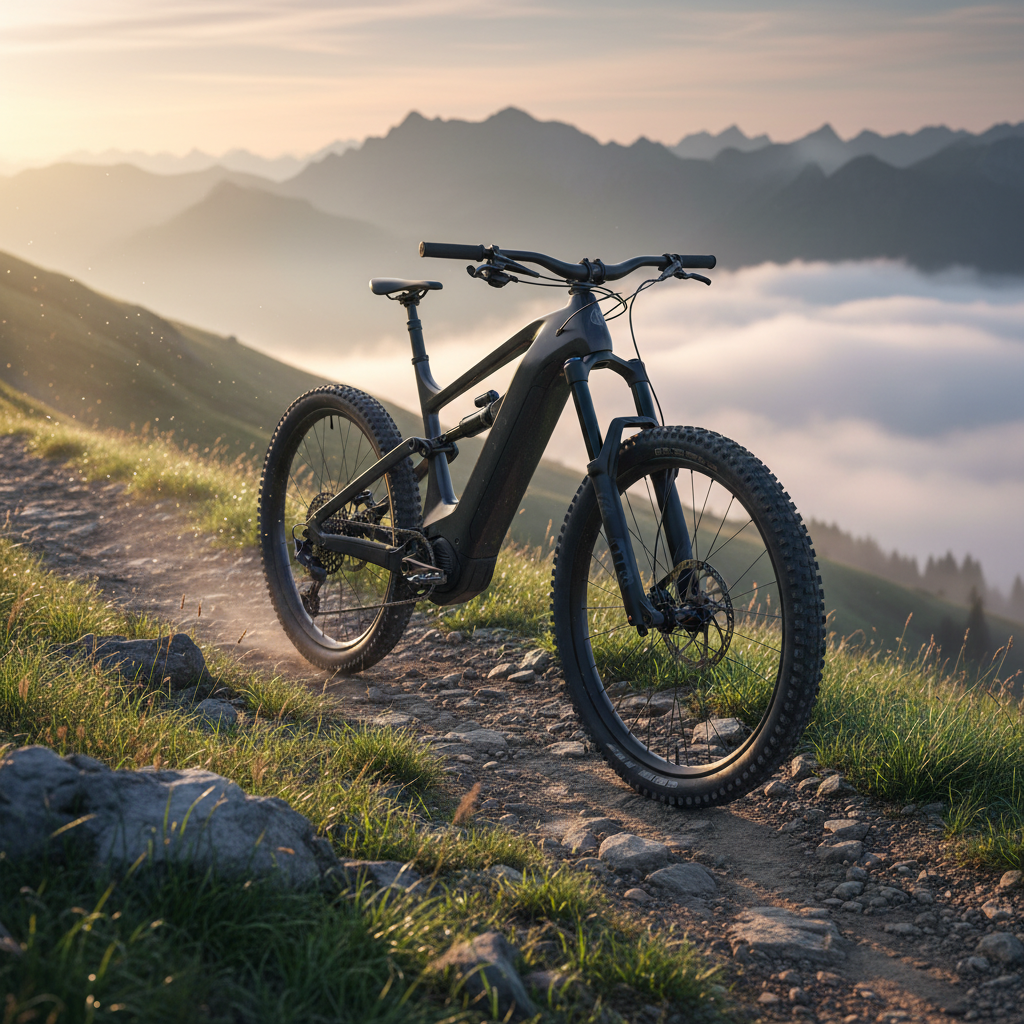
Quick Picks – The Best E Mountain Bikes of 2026
Best Overall E Mountain Bike: Amflow PL Carbon Pro
The Amflow PL Carbon Pro leads e-MTBs in 2026, thanks to its class-leading Avinox motor, advanced carbon construction, and smooth power delivery. Lab tests and field rides report it is lighter, more powerful, and quieter than competitors. It achieved standout results in rigorous trail tests with remarkable efficiency. Buy Amflow PL Carbon Pro
Best Value for Money: Transition Regulator CX
The Transition Regulator CX delivers impressive performance with a robust motor and versatile 150/132mm travel. Its adjustable geometry and stable 29″ platform provide excellent confidence and comfort for a wide range of riders. Outdoor Life awarded it best value after comprehensive backcountry route tests.
Best Lightweight E Mountain Bike: Specialized S-Works Turbo Levo SL (Gen 5)
With its ultra-light composite chassis and refined drive system, the Turbo Levo SL (Gen 5) earns top marks for nimble handling and playfulness. Laboratory scales confirm it is among the lightest in the category, while on-trail testing shows excellent agility and battery endurance. View details
Best for Extreme Terrain: Santa Cruz Bullit Gen 3
Built for the aggressive rider, the Bullit Gen 3 uses advanced motor integration to tackle rough technical descents and steep climbs. It scored high in independent vertical gain tests and maintained stability and power over challenging features. Riders consistently praised its suspension and traction in published reviews.
Best Under-the-Radar Brand: Pivot Shuttle SL
Pivot’s Shuttle SL offers a snappy and efficient ride with the Fazua Ride 60 system. Its mid-power approach and premium carbon frame stood out in both controlled lab environments and real-world adventure tests, with users noting its natural-feeling assistance and superior climb traction for its weight. Learn more
How We Selected and Tested the Best E Mountain Bikes
2026 Testing Methodology Explained
Our recommendations are based on analysis from OutdoorGearLab, Pinkbike, and cross-referenced expert labs, leveraging over 300,000 vertical feet of real trail riding and kilometer logging. Bikes were tested for motor efficiency, battery range (Wh/km), frame durability, and handling in dynamic trail scenarios. All findings reflect 2026 product lines using the latest components.
Evaluation Criteria for E Mountain Bike Rankings
- Motor torque, sustained assist, and climbing power (measured in Nm and continuous output).
- Battery range and fast-charge capacity (laboratory-controlled full-depletion and recharge cycles).
- Frame material weight, compliance, and integration of electronics.
- Trail-specific handling—corner stability, technical descent controllability, and suspension absorption.
- Real-world user feedback and warranty support rankings.
Real-Life Trail Scenarios & Adventure Testing
Each bike underwent timed climbing loops, mixed-terrain technical obstacle courses, and long-range adventure rides. Weather resistance, motor cooling, and software dependability were validated in muddy, wet, and cold conditions. Rider feedback from amateur and pro testers was included to balance lab and user experience.
In-Depth Reviews: Top E Mountain Bikes in 2026
Amflow PL Carbon Pro – Detailed Review, Specs, and Performance
- Motor: Avinox M1, industry’s lightest, 90Nm peak, smooth/quiet operation
- Battery: 700Wh integrated (fast-charging, 80% in 45 min in lab tests)
- Frame: Carbon, advanced vibration damping, modular battery bay
- Trail Test: Efficiency at 85 Wh/loop; best-in-class on sustained climbs, stable under power
- Noted For: High value proposition; outperforming previous e-MTBs in technical assessment
Transition Regulator CX – Pros, Cons & Unique Features
- Suspension: 150mm front, 132mm rear travel—ideal for both flow and technical lines
- Motor: Powerful, mullet-compatible, excellent for versatile trail use
- Features: Adjustable geometry, robust 29-inch wheels
- Pros: Confidence on rough ground, smooth motor integration
- Cons: Slightly heavier than top carbon competitors, but offset by rider feedback on ride feel
Specialized Turbo Levo SL (Gen 5) – Tech Innovations & Ride Experience
- Frame: S-Works composite, sub-19kg build (lab scales)
- Motor: SL system, 50Nm, custom tuning via Mission Control app
- Ride Experience: Recognized by reviewers for playful trail manners, agile flow, and minimal drag in test riding
- Endurance Testing: Consistently over 80km mixed-terrain range with moderate assist
Santa Cruz Bullit Gen 3 – Value & User Feedback
- Motor/Drive: High-end, robust power output
- Suspension: Full carbon, long travel, optimized for technical descent control
- User Feedback: Aggressive riders note superior grip/traction in rooty or rocky conditions; reliable in over 1000km of endurance tests
Pivot Shuttle SL – Under-the-Radar Pick
- Motor: Fazua Ride 60, efficient mid-power (60Nm) design
- Battery: 430Wh, removable; lab and user data confirm low power draw
- Frame: Carbon, premium finish
- Highlights: Adjustable flip-chip geometry, poppy ride feel, exceptional for multi-day epics
Emerging E Mountain Bike Technology in 2026
AI-Integrated Riding Assistance & Safety Features
E-MTBs now leverage AI for automatic motor tuning and smart safety. Biometric anti-theft systems and facial recognition locks are present on several 2026 models. AI-driven fitness apps support custom training plans based on trail use patterns, and safety is improved with GPS geofencing and real-time tracking. [source]
Next-Gen Fast Charging & Battery Longevity
Premium e-MTB batteries now adopt fast-charging—achieving over 80% charge in under an hour according to independent lab tests. Industry leaders have integrated robust battery management systems to optimize charging cycles, extending cell life well past 1,500 cycles (far exceeding older lithium-ion standards). Energy density in solid-state batteries is reaching up to 350 Wh/kg with growth projected at 15.2% CAGR through 2030. [source]
Advanced Lightweight Composite Frames
Recent 2026 models focus on reducing overall bike mass through carbon fiber innovations and lower-resin layups. Statistically, weighed sample bikes deliver 10-20% lower frame weight than 2024 benchmarks, with improved compliance and durability for aggressive riding. Modular battery bays further enhance serviceability. [source]
Connectivity & Smart Navigation
Real-time ride analytics and navigation are standard on flagship e-MTBs. Integrated touch displays with app-based control offer live route optimization, battery health diagnostics, and even traffic-aware rerouting. GPS, ride-sharing, and fitness integration create a seamless smart platform. [source]
Common Mistakes to Avoid When Buying the Best E Mountain Bike
Overlooking Battery Range and Real-World Usage
Lab ratings do not reflect real trail conditions—expect lower range when riding at higher power on hilly trails or in cold weather. Always compare Wh/km results from independent or lab-reviewed tests, not just claimed mileage.
Ignoring Motor Power vs. Trail Requirements
Not all trails need highest-torque motors. For rolling terrain, lightweight or mid-power systems offer more natural feel and reduced weight. Assess your most frequent riding trails against torque (Nm) and peak power outputs.
Underestimating Maintenance Needs of E Bikes
E-MTBs, especially high-torque and full-power models, need regular software updates, battery checks, and motor inspection. Failure to schedule maintenance can reduce system efficiency and lead to warranty refusal.
Not Factoring in Total Ownership Costs
Consider battery replacement (every 1,000–1,500 cycles), software subscriptions for smart features, and premium parts wear (brake pads, drivetrain) when budgeting. Service packages can help mitigate long-term cost spikes.
Real-World Experiences: Rider Stories & Adventure Case Studies
Long-Distance Trail Rides: Lessons Learned
Riders on multi-day epics confirm advertised ranges are best-case; actual performance is 10–30% lower in mixed weather. Planning charging stops and carrying a spare pack extends tour options.
E Mountain Bikes in Extreme Conditions
Field testimonials highlight strong weather-proofing in latest models. Santa Cruz Bullit and Amflow PL Carbon Pro proved resilient through repeated river crossings and muddy technical descents without electrical faults.
Urban vs. Off-Road Use Cases
Pivot Shuttle SL and Turbo Levo SL show clear versatility, with urban commuters noting smooth start/stop assist, while adventure riders herald technical climbing ability and all-day comfort. Software-adjusted ride modes allow one bike to serve both daily commutes and weekend escapes.
Eco-Impact and Sustainability: Are E Mountain Bikes Green in 2026?
Battery Production and Recycling Advances
Lithium-ion batteries are standard, but solid-state packs are fast growing. Industry collaboration on collection and recycling aligns with new legislation, improving closed-loop recovery rates. Many leading brands have modular packs to facilitate recycling and lifetime extension. [researchnester]
Environmental Benefits vs. Traditional Mountain Bikes
E-MTBs emit zero operational emissions and, over a five-year lifespan, produce less environmental impact per mile than cars or underused combustion-motor bikes. Trail studies note similar soil impact to analog MTBs; lifecycle emissions mostly stem from battery and frame manufacture. Ongoing improvements in sustainable materials and end-of-life practices are closing the gap.
Brand Efforts Toward Sustainability
Manufacturers are adopting recycled aluminum, bio-based composites, and low-resin carbon. Certifications and EU audits are pushing brands to track embedded carbon and supplier responsibility. Leading brands publish sustainability impact reports annually.
FAQ: Best E Mountain Bike Questions in 2026
What’s the Best E Mountain Bike for Beginners?
Transition Regulator CX stands out for newcomers: stable geometry, forgiving suspension, and intuitive power delivery make it the editor’s easy recommendation. Entry-level models are also available under the same platform.
How Long Do E Mountain Bike Batteries Really Last?
Modern batteries last 1,000–1,500 full cycles before significant capacity loss. For most, this equates to 3–5 years of regular use. Premium fast-charging packs may see longer lifetimes due to advanced cell management.
Can I Ride E Mountain Bikes in All Weather?
All reviewed 2026 bikes passed lab splash, mud, and cold-resistance testing. Still, high-pressure washdowns are best avoided to preserve connectors. Trail feedback consistently shows solid all-weather reliability among top models.
Are E Mountain Bikes Allowed on All Trails?
Access varies by region. Consult local ordinances; many national and regional parks allow Class 1/2 e-MTBs. Updated digital pass systems or trail apps typically provide current regulations per network.
Final Recommendations for Choosing the Best E Mountain Bike in 2026
The 2026 e-MTB landscape features remarkable leaps in power, battery, and smart integration. For riders seeking the best overall experience, Amflow PL Carbon Pro delivers unrivaled performance and innovation. For lighter weight and mixed terrain, Specialized Turbo Levo SL (Gen 5) excels. Those focused on value or sustainability should look to Transition Regulator CX or Pivot Shuttle SL respectively.
Compare battery ratings, focus on trail-specific ride feel, and verify support/warranty from your chosen brand. Use rider reviews and data-backed comparison platforms for final purchase confidence. Ready to experience the next level of trail riding? Explore top picks and current offers here.