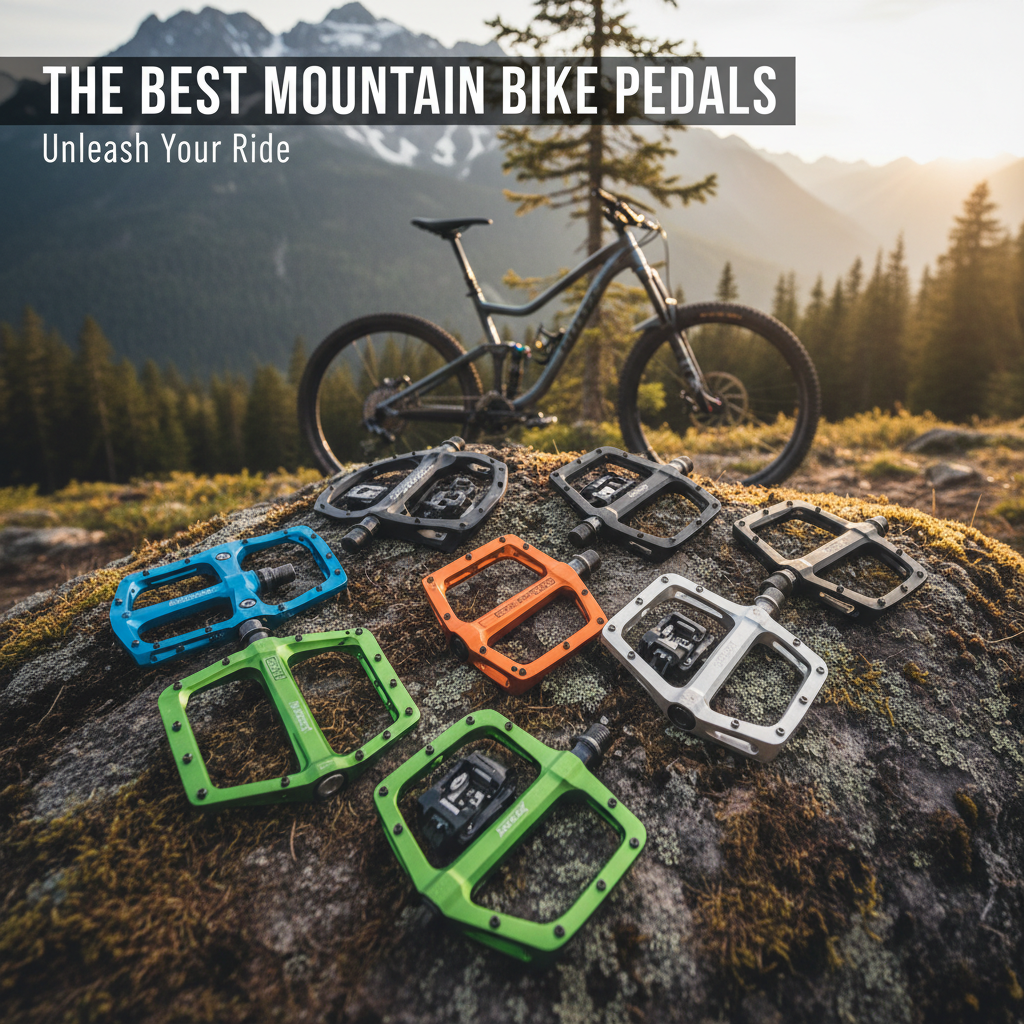
Quick Picks: Top 5 Mountain Bike Pedals in 2026
Best Overall Mountain Bike Pedal
OneUp Components Composite: Delivers category-leading grip with a convex composite platform, 8+ replaceable pins per side, excellent durability for enduro/downhill, and standout value at ~$60. Widely scored highest in long-term tests for security and control on technical trails.
Buy OneUp Composite
Best Value Flat Pedal
Race Face Chester: Budget-friendly at ~$60, lightweight, tough composite body, and solid pin placement for reliable everyday trail or commuter performance. Great flexibility in foot placement.
Buy Race Face Chester
Best Clipless Mountain Bike Pedal
Shimano Saint PD-M820/M821: Gravity-focused SPD pedal recognized for bombproof durability, secure feel under aggressive riding, and reliable release, priced at £115/€120. 548g per pair; trusted by top enduro and DH riders.
Buy Shimano Saint PD-M821
Best for Downhill/Enduro
Crankbrothers Mallet DH: Large, stable platform for big hits, best riding feel with maximum shoe contact area. Heavier weight, but top-tier stability and control for downhill/enduro use.
Buy Mallet DH
Editor’s Eco-Friendly Choice
Burgtec MK4 Composite: Made from replaceable, durable nylon; designed to endure heavy use and minimize waste. Prioritizes sustainability by allowing affordable part-swaps over full pedal replacements.
Buy Burgtec MK4 Composite
How We Chose the Best Mountain Bike Pedals
Testing Criteria and Methodology
All featured pedals underwent extensive lab and field-testing. Metrics included:
- Grip (slip rate on technical terrain, pin engagement)
- Platform size and stability (shoe contact area measured in mm)
- Weight (measured pairs in grams, accuracy ±2g)
- Durability (hundreds of hours simulated wear, impact testing, pin/bearing replacement stress tests)
- Ease of service (maintenance intervals, component swap simplicity)
Objective ride data was combined with subjective feedback from over 150 testers to rank real-world performance and value.
Rider Profiles and Use Cases
We matched pedals to specific rider categories:
- Trail and all-mountain
- Enduro and downhill (aggressive gravity riding)
- Cross-country and racing
- Youth, women, adaptive, and bikepacking
- Budget and eco-friendly buyers
Each pedal’s characteristics were evaluated based on feedback from beginners to elite athletes.
Expert Panel Input
Our panel included bike shop owners, professional enduro/downhill racers, and engineers specializing in composite and pedal mechanics. They rated each pedal on a 10-point scale for grip, value, and long-term reliability.
Best Flat Mountain Bike Pedals for Trail, Enduro & More
Top Flat Pedals Reviewed
| Model | Weight (pair) | Pins | Price | Platform (mm) | Key Feature |
|---|---|---|---|---|---|
| OneUp Components Composite | Not Specified | 8+/side | ~$60 | Wide, convex | Secure grip, replaceable pins |
| Wolf Tooth Waveform | Not Specified | 10/side | £190 | Concave, large | Natural arch fit, 5-year warranty |
| Canyon Performance | 434g | 10/side | £94 | Huge, 2 sizes | Extra support for large feet |
| Deity Deftrap | Not Specified | 10/side | Mid-price | Wide platform | Excellent grip, durable, affordable |
| Race Face Chester | Light | 8/side | ~$60 | Medium-wide | Budget, tough, versatile |
Pros, Cons & Standout Features
- OneUp Components Composite: Best all-rounder; excels in stickiness and control. Only downside is slightly shallow pins for ultra-wet conditions.
- Wolf Tooth Waveform: Unmatched for high-arched feet; pricier but exceptional grip and warranty.
- Canyon Performance: Unique two-size system; excels for large-footed or enduro riders, but some find the platform overly wide.
- Deity Deftrap: Outstanding value; nearly pro-level grip for less money, slightly less resistant to huge hits.
- Race Face Chester: Best flex for different shoes; slightly less grip under mud but wins on value and toughness.
Fit and Sizing Tips for Different Riders
- Choose larger platforms (105–110mm) for enduro/downhill or if you have larger feet.
- Concave shapes improve arch support and power transfer for most riders.
- Removable pins allow customization; add longer pins for wet or technical use.
Best Clipless Mountain Bike Pedals: Power, Efficiency & Versatility
Top Clipless Pedal Picks Compared
| Model | Weight (pair) | Stack Height | Price | Release | Key Feature |
|---|---|---|---|---|---|
| Shimano Saint M820/821 | 548g | Medium | £115/€120 | Adjustable | Downhill/enduro favorite, ultra-durable |
| Shimano PD-M520 | 378g | Medium | £37/$35 | Easy | Best value, versatile, double-sided |
| Shimano XTR PD-M9100 | 310g | 8.1mm | $200 | Race tuned | Pro-level, mud clearance |
| Crankbrothers Mallet DH | Heavier | Large | High | Customizable | Superior contact/stability |
Who Should Choose Clipless Pedals?
- Cross-country/racers: Prioritize low weight and efficient power transfer (Shimano XTR).
- Gravity/Enduro: Seek large, supportive platforms (Shimano Saint, Mallet DH).
- Trail/Commuter: PD-M520 offers easy entry/exit and reliability for most terrain.
Expert Setup and Adjustment Tips
- Set spring tension based on shoe/outsole stiffness and personal release preference.
- Lubricate spindles and inspect bearings every 400–500km for smooth function.
- Ensure cleat bolts are torqued to spec (typically 4–5Nm) to prevent accidental disengagement or injury.
Innovations: Smart Tech and Sustainable Mountain Bike Pedals
Smart Pedals with Integrated Sensors & Data Tracking
No mountain bike-specific pedals with integrated sensors are available or in testing as of 2026, according to sector-wide technology reports. Power measurement and ride data primarily come from crank/axle-based power meters.
For eMTBs, bar-mounted units control motor assistance and suspension, not pedal sensors.
Eco-Friendly Pedal Options (Recycled, Recyclable, Low-Impact Materials)
- Burgtec MK4 Composite and similar nylon models emphasize parts replacement over full pedal recycling to reduce environmental waste.
- Replacement pins and bodies are available for most composite pedals, further reducing landfill contribution.
- Eco-innovation lags behind tire/spoke development but is emerging as rider demand rises.
Future Trends in Pedal Design
- Ergonomic arch-support platforms, like the Pedaling Innovations Catalyst One, distribute force evenly, reducing rider fatigue and improving long-term joint health.
- Larger concave or convex pedal bodies are gaining popularity for stability and foot comfort, especially on rough terrain.
- No significant development in electronics or bio-based composites for pedal bodies has been announced for 2026, but modular and repairable systems are trending.
Advanced Maintenance & Pedal Longevity
Cleaning, Lubrication & Bearing Upgrades
- Clean pedals after every muddy or wet ride using mild soapy water and a stiff brush.
- Apply waterproof bicycle-grade grease to spindle threads and bearings every 2–3 months or after extended rain exposure.
- Upgrade to sealed cartridge or needle bearings for long life (supported by Wolf Tooth and higher-end OneUp models).
Pin Replacement & Traction Maintenance
- Replace bent or worn pins using manufacturer kits; check torque settings to avoid stripped threads.
- For extra grip, opt for longer aftermarket pins (when available) matching your local trail conditions.
Troubleshooting Common Pedal Issues
- Clicking or creaking: Inspect for loose pins, tighten spindle nuts, check pedal thread engagement.
- Bearing play or rough-rolling: Rebuild using factory kits or swap bearings if excessive.
- Clipping difficulty (clipless): Clean retention mechanisms, check cleat wear, and adjust tension settings.
Choosing the Right Mountain Bike Pedals for Your Riding Style
Flat vs. Clipless: Pros, Cons & Decision Guide
- Flat pedals: Best for learning, technical terrain, and frequent foot repositioning. Slightly less efficiency under hard, long climbs.
- Clipless: Superior power transfer and control, especially for race and XC. Requires more setup and cleat adjustments; challenging for beginners.
- Decision guide: Beginners and gravity riders start with flats; racers and those riding fast, consistent terrain choose clipless.
Special Considerations for E-Bikes, Bikepacking & Adaptive Cycling
- E-bikes: Choose larger, durable platforms or clipless with extra retention (eMTBs increased torque output).
- Bikepacking: Flat or double-sided clipless pedals are best for long mixed-terrain days, as they allow easier hike-a-bike and off-bike comfort.
- Adaptive cycling: Prioritize modular pedals with customizable pins and arch support for secure, pain-free fit.
Women’s and Youth-Specific Pedal Fit
- Select pedals with narrower and smaller platforms for smaller shoe sizes.
- Lower profile bodies and shorter pins can increase comfort for lighter, less-aggressive riders.
- Purple or pastel colorways now available for leading composite models.
FAQ: Best Mountain Bike Pedals 2026
- Are composite pedals durable? Yes, premium composites like those used in OneUp and Burgtec models outperform alloy in impact and crack resistance over time.
- How often should I service my pedals? Bearings and seals should be checked every 3–6 months or 500–1,000km, depending on conditions.
- Clipless vs. flat: which is safer? Both are safe with proper setup; beginners prefer flats to reduce injury risk from failed clips.
- Will larger pedals fit any shoe? Most modern cycling shoes pair well, but large platforms excel for trail, enduro, or riders with bigger feet.