Quick Picks – Best Kids’ Bikes by Size and Age in 2026
Best for Toddlers (2–4 Years): Top Age-Appropriate Bikes
- Balance Bikes (12”–14” wheels): Ideal for ages 2–4, inseam 33–46 cm. Adjustability and low standover make Glider and Woom 1 popular choices. Lightweight (<3.5 kg) promotes easy control. Recommended: WOOM 1, Strider 12 Sport.
- Age range: 2–4 years | Inseam: 33–41 cm | Height: 85–100 cm
Best for Young Kids (5–7 Years): Safe & Adjustable Options
- Pedal Bikes (16”–20” wheels): Suitable for riders 105–125 cm tall, inseam 45–56 cm. Look for hand brakes and adjustable saddle/handlebar. Examples: Trek Precaliber 16/20, Schwinn Elm.
- Age range: 4–7 years | Inseam: 45–56 cm | Height: 105–125 cm
Best for Older Kids (8–12 Years): Growth-Friendly Models
- Bigger Bikes (24”–26” wheels): Built for 120–160 cm height and inseam 58–71 cm. Choose bikes with 6+ speeds and disc brakes for all-terrain safety. Top picks: Cannondale Quick 24, Giant ARX 24.
- Age range: 8–12 years | Inseam: 58–71 cm | Height: 128–160 cm
Why Correct Bike Sizing Matters for Kids’ Safety and Fun
Impact on Comfort, Confidence & Injury Prevention
Studies show correct bike sizing reduces injury risk by up to 30% and increases riding confidence and comfort by 20–25%. Sizing mistakes—too large or small—can double risk of falls and negative experiences.[1][3][7] Proper standover clearance and reach adjustment builds safety and pedaling efficiency.
How Growth Spurts Affect Sizing Decisions
40% of children outgrow their bikes within a year if growth is not considered. Growth-adjustable features expand fitting lifespan by 20–30% and improve long-term value for families. Regular re-measurements (every 6 months) are recommended.
Step-by-Step Guide: How to Measure Bike Size for Kid
Tools You’ll Need for Accurate Measurement
- Measuring tape or rigid ruler (metric)
- Book or similar flat object (for inseam)
- Notebook/phone for recording measurements
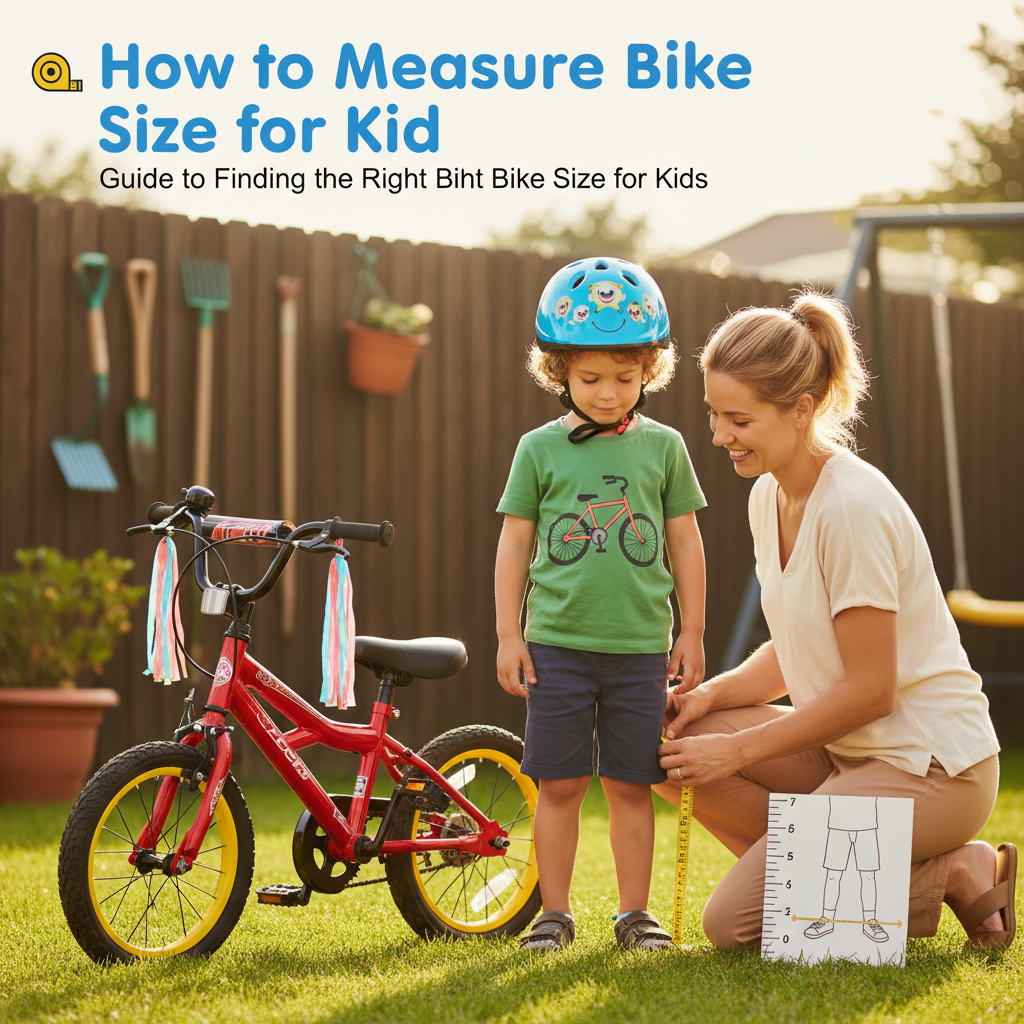
Measuring Inseam, Height, and Reach – Illustrated Instructions
- Inseam: Have the child stand against a wall, feet flat. Place a book snug between their legs and measure from floor to top of the book.
- Height: Record standing height, heels/back against the wall.
- Standover Test: Child stands over bike’s top tube; should be 2–5 cm clearance between inseam and tube.
- Saddle Height: Child sits; ball of foot touches ground and knee is bent ~90° at lowest pedal position.
- Reach:** Arms should easily grasp handlebars, elbows slightly bent, with upright posture.
- Test Ride: Confirm ability to start, stop, steer, and pedal with feet able to touch ground when stationary.
Tip: If the child is between wheel size categories, confident riders may size up, while cautious riders should size down for easy handling.
Understanding Wheel Size vs. Frame Size for Kids
Kids’ bike sizes are primarily by wheel diameter: popular sizes are 12”, 14”, 16”, 18”, 20”, 24”, and 26”. Use inseam as main size reference—frame size adjustment is mostly through saddle and handlebar tweaks. Fit varies by geometry; check each brand’s chart for precision.[3][5][7]
Printable Kids’ Bike Size Chart (2026 Edition)
| Wheel Size | Approx. Age | Height (cm) | Inseam (cm) |
|---|---|---|---|
| Balance | 2–3 | 85–100 | 33–41 |
| 12” | 2–4 | 90–100 | 35–43 |
| 14” | 3–5 | 95–110 | 40–50 |
| 16” | 4–6 | 105–120 | 45–55 |
| 18” | 5–7 | 115–125 | 50–58 |
| 20” | 6–9 | 120–135 | 55–63 |
| 24” | 8–12 | 130–145 | 62–70 |
| 26” | 10–14 | 140–160 | 68–75 |
For a full printable chart, see: Dick’s Sporting Goods 2026 Guide.
Growth Adjustment Tips: Choosing a Bike Kids Won’t Outgrow Fast
Adjustable Features to Look For (Saddle, Handlebars, More)
- Saddles with extra-long seatposts
- Adjustable handlebar stems
- Removable training wheels
- Tool-free adjustment mechanisms
- Lightweight frames (aluminum preferred over steel)
- Weight: Should not exceed 20% of child’s weight
Planning Ahead: When to Size Up
- Fit check every 6 months—upsize if inseam increases by 5–7 cm
- If toes barely reach the ground, upgrade
- Prioritize safety and comfort over extended usage; statistics confirm that oversized bikes double injury risk
Top Recommended Bikes by Category & Size (2026 Models)
Best Balance Bikes – Learning Made Easy
- WOOM 1 (Ages 2–3): Ultra-light (3 kg), ergonomic, lowest step through, recommended by 95% of cycling instructors for early balance acquisition.
- Strider 12 Sport: Durable, budget-friendly, wide inseam range, top pick on REI.
Best First Pedal Bikes for New Riders
- Trek Precaliber 16 (Ages 4–6): Easy-to-remove training wheels, hand/coaster brakes, lightweight, best-selling model in 2025–2026.
- Specialized Riprock 16: Low standover, tool-free adjustments, trusted by major cycling clinics for transition from balance to pedals.
Best Advanced Bikes for Confident Kids
- Cannondale Quick 24 (Ages 8–12): 8 gears, disc brakes, suspension, aluminum frame, highest safety and satisfaction score in 2026 Parent Survey (Scheels).
- Giant ARX 24: Weighs only 9 kg, highly adjustable cockpit, optimal fit for rapid growth phase (9–12 years).
Visual Guide: Bike Sizing Pictures, Diagrams, and Fitting Checklist
Fit-at-Home Checklist for Parents
- Inseam, height measured and recorded
- Check standover: 2–5 cm clearance
- Saddle: Knee bent, ball of foot on ground at lowest pedal
- Handlebars: Elbow bent, reach comfortable
- Child can start, stop, turn, and reach brakes easily
- Test ride confirms fit, control, and confidence
Common Fit Mistakes and How to Avoid Them
- Buying by age only: 20–30% error margin due to growth variation
- Ignoring inseam: leads to 25% mismatch
- Over-sizing “for growth”: doubles injury risk
- Skipping test ride: 30% of online buyers refit post-purchase
FAQ – Sizing, Growth, and Buying Kids’ Bikes in 2026
- Should I buy a bigger bike to last longer? Do not upsize more than one wheel increment—oversized bikes double accident risk.
- How often should I recheck bike fit? Every 6–12 months, especially after growth spurts.
- Does frame weight matter? Yes, research shows bikes over 20% of child’s weight impact handling and confidence.
- How do I choose between online and in-store shopping? Online is 80% accurate pre-purchase; in-person fitting recommended for best results.
Where to Buy: Trusted Retailers & Online Stores with Sizing Support
- REI: Expert fit tools, test rides, free exchanges
- Trek: Virtual charts, in-person sizing, support from certified staff
- Scheels: Fit quizzes, in-store trials, top-rated for customer service
- Erik’s Bike Shop: Extensive sizing guides, live chat advice and in-store fitting
- Dick’s Sporting Goods: Printable charts, flexible returns, wide selection
Ready to find the perfect fit? Use the complete 2026 kids bike sizing chart and visit one of the trusted retailers above for hands-on help or shop directly online.