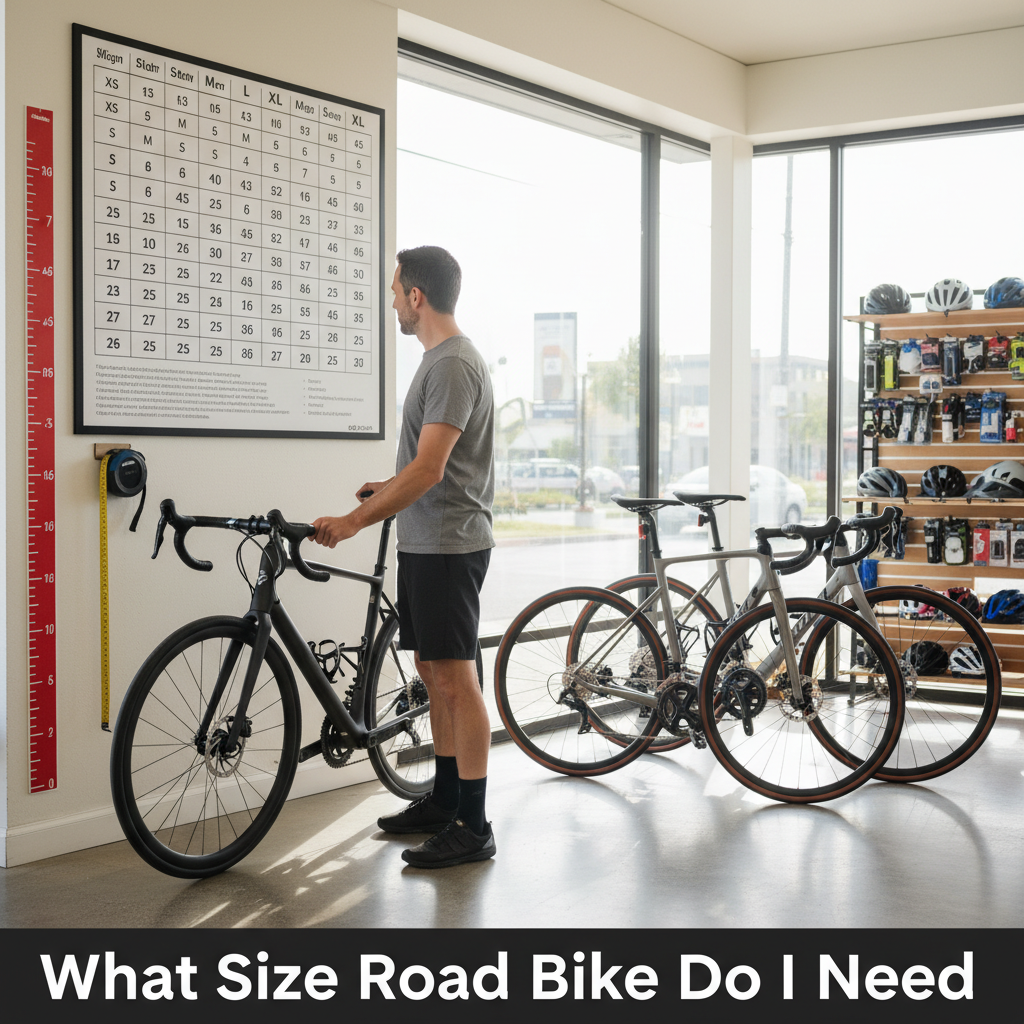
If you are asking yourself “what size road bike do I need?”, this complete guide is made just for you. Choosing the right road bike size is essential for comfort, performance, and safety. This article will teach you how to find your perfect fit, step by step, even if you are new to cycling. We keep things simple, practical, and suitable for a Grade 9 reading level. Let’s get rolling!
Quick Sizing Guide: Road Bike Size Chart by Height and Inseam
Road Bike Size Chart (Metric and Imperial)
The easiest way to answer: what size road bike do I need? Use this table to match your height and inseam to the right frame size.
| Rider Height | Inseam | Frame Size (cm) | Frame Size (in) | Bike Size Name |
|---|---|---|---|---|
| 150-160 cm (4’11”-5’3″) | 65-70 cm (25.5″-27.5″) | 47-49 | 18.5″-19.3″ | XS |
| 160-170 cm (5’3″-5’7″) | 70-75 cm (27.5″-29.5″) | 50-52 | 19.7″-20.5″ | S |
| 170-175 cm (5’7″-5’9″) | 75-78 cm (29.5″-30.7″) | 53-54 | 20.9″-21.3″ | M |
| 175-180 cm (5’9″-5’11”) | 78-82 cm (30.7″-32.3″) | 55-56 | 21.7″-22.0″ | M/L |
| 180-185 cm (5’11”-6’1″) | 82-86 cm (32.3″-33.9″) | 57-58 | 22.4″-22.8″ | L |
| 185-190 cm (6’1″-6’3″) | 86-90 cm (33.9″-35.4″) | 59-60 | 23.2″-23.6″ | XL |
| 190-200 cm (6’3″-6’7″) | 90-95 cm (35.4″-37.4″) | 61-63 | 24.0″-24.8″ | XXL |
How to Interpret the Size Chart
To use the chart, measure your height and your inseam. Then, look for the matching values in the table. The bike frame size is in centimeters or inches, and size names (XS, S, M, etc.) may vary by brand but give a quick idea. Always check the brand’s own sizing too.
Common Sizing Mistakes to Avoid
- Choosing by height only – always check your inseam for better accuracy.
- Assuming your old bike size fits every brand – different brands and models fit differently.
- Ignoring comfort – a bike that’s too big or small causes pain or injury.
- Skipping a test ride or expert advice – if possible, try before buying.
Step-by-Step: How to Measure Yourself for the Perfect Road Bike
Measuring Your Height Accurately
- Remove your shoes and stand straight against a wall.
- Mark the top of your head on the wall with a pencil.
- Use a meter stick or tape measure to check the distance from the floor to the mark. This is your height.
Measuring Your Inseam the Right Way
- Stand with your feet about 15 cm (6 inches) apart.
- Place a book or flat object up between your legs as high as comfortable.
- Measure from the floor to the top of the book/object. This is your inseam.
Both height and inseam are needed to answer the question, “what size road bike do I need?”
Interactive Fit Calculator: Getting a Customized Recommendation
Many bike brands and websites offer online fit calculators. You enter your height and inseam, and the tool suggests a frame size. This helps narrow your choices but always check with your local bike shop if you can.
Beyond the Chart: Matching Bike Geometry to Your Body and Riding Style
Why Body Proportions Matter (Torso/Arm/Leg Length)
Everyone’s body is different. Some people have longer legs, shorter arms, or a longer torso. This affects how a bike fits. Many ask, “what size road bike do I need if I have long legs?” In these cases, consider frame reach (top tube) and stack, not just size. A bike expert can help you spot these details.
Flexibility, Posture, and Comfort
- If you are less flexible or want a more comfortable ride, choose a bike with a taller front end (high stack).
- Sporty or advanced riders may prefer a lower handlebar position for aerodynamics.
Remember, comfort is key to enjoying cycling, no matter your goal.
Fit Tips for Different Riding Goals (Endurance, Racing, Touring)
- Endurance: Look for bikes with relaxed geometry, a bit shorter top tube, and higher headset.
- Racing: Aim for a longer, more aggressive frame and lower handlebars.
- Touring: Choose frames with enough space for racks and wider tires, plus a comfortable fit for long hours.
Road Bike Sizing Differences by Brand and Frame Type
Comparing Top Brands: Specialized, Trek, Giant & More
Brands like Specialized, Trek, Giant, Cannondale, and others may label their sizes differently. A “54cm” from one brand may feel very different from another. Always check each brand’s chart and, when possible, try the bike or use “what size road bike do I need” tools on their websites.
Stack vs. Reach vs. Top Tube: What Really Affects Fit?
- Top Tube Length: Distance from seat post to handlebars. Controls how stretched out you are.
- Stack: Height from the bottom bracket to the top of the head tube. Higher means more comfort.
- Reach: How far you reach forward to the handlebars. Too long = stretched; too short = cramped.
Get familiar with these numbers, especially if you ask, “what size road bike do I need for my proportions?”
Compact vs. Traditional Geometry Explained
- Compact Geometry: Sloping top tubes, shorter seat tubes, fits a wider range of riders on each frame size.
- Traditional Geometry: Horizontal top tubes, classic look, sizing is more sensitive, and fewer overlaps between sizes.
- Compact frames often suit beginners well due to easier stand-over height and more options.
What If You’re Between Sizes? How to Choose and What to Adjust
Pros and Cons of Sizing Up or Down
- Size Up: More stable at speed, extra reach, but can feel awkward if too big.
- Size Down: Easier to control, lighter, but might feel cramped or put stress on your knees.
Ask yourself, “what size road bike do I need if I’m between two sizes?” In general, go for the smaller size for more comfort, unless you have extra long arms or legs.
How to Adjust Fit With Stems, Handlebars, and Saddles
- Stems: Changing the stem length or angle adjusts handlebar reach and height.
- Handlebars: Narrower or wider bars change shoulder comfort and bike handling.
- Saddles: Adjust saddle height and position to get your knee and hip angles right.
These changes fine-tune comfort if the size is close, but not perfect.
When a Professional Bike Fit Is Worth It
- If you plan to ride a lot, race, or feel pain on your current bike, a professional fit is wise.
- Experts check body position, flexibility, and movement to give you a bike that truly fits.
Visual Guide: Checking Your Fit at Home (With Photos & Video)
Key Signs Your Bike Fits (Or Doesn’t)
- You can stand over the frame with 2-4 cm of space (for traditional frames).
- When sitting, your knee is slightly bent at the bottom of the pedal stroke.
- Your arms and shoulders are relaxed, not overstretched or too cramped.
- No pain in your back, neck, or hands after riding.
Quick At-Home Fit Checklist
- Check stand-over clearance: Can you stand flat-footed with some space from the top tube?
- Pedal position: Knee should be slightly bent at the bottom of each stroke.
- Handlebar reach: Can you reach comfortably with soft elbows and relaxed shoulders?
- Ride a short distance: Pain or numbness means you may need an adjustment.
FAQ: Common Questions About Road Bike Size in 2026
- Q: What size road bike do I need if I’m still growing?
A: Pick the frame that fits now—your safety is more important than “growing into” a bigger bike. Adjust your saddle and handlebars as needed. - Q: How does women’s vs. men’s sizing work?
A: Women-specific bikes may have shorter top tubes and different handlebars/saddles. But many women fit well on unisex frames, using the same size guide. - Q: What if I order online and it doesn’t fit?
A: Check the return policy first. Many shops allow exchanges, but always measure yourself carefully before buying. - Q: Can I make my current bike fit better?
A: Yes, by adjusting stems, seat, or handlebars—or visiting a bike fitter for expert help.
Resources: Online Fit Tools, Bike Shops, and Further Reading
- Brand Fit Calculators (e.g., Trek, Specialized, Giant official websites)
- Local bike shops: Free advice and often free sizing checks
- Bike forums and cycling groups: Share experiences and tips about what size road bike do I need
- Further Reading: “Bike Fit 101” by British Cycling, or “The Complete Guide to Bike Fit” by Phil Burt
Summary: Key Points and Next Steps
- Finding the answer to “what size road bike do I need” starts with measuring your height and inseam accurately.
- Use a sizing chart as a first guide, but remember that fit also depends on your body shape, flexibility, and riding style.
- Adjustments and professional fits are great investments in your comfort and health.
- Use online fit calculators and visit a local shop whenever possible.
- Most importantly, enjoy the process—cycling is all about fun, adventure, and freedom!