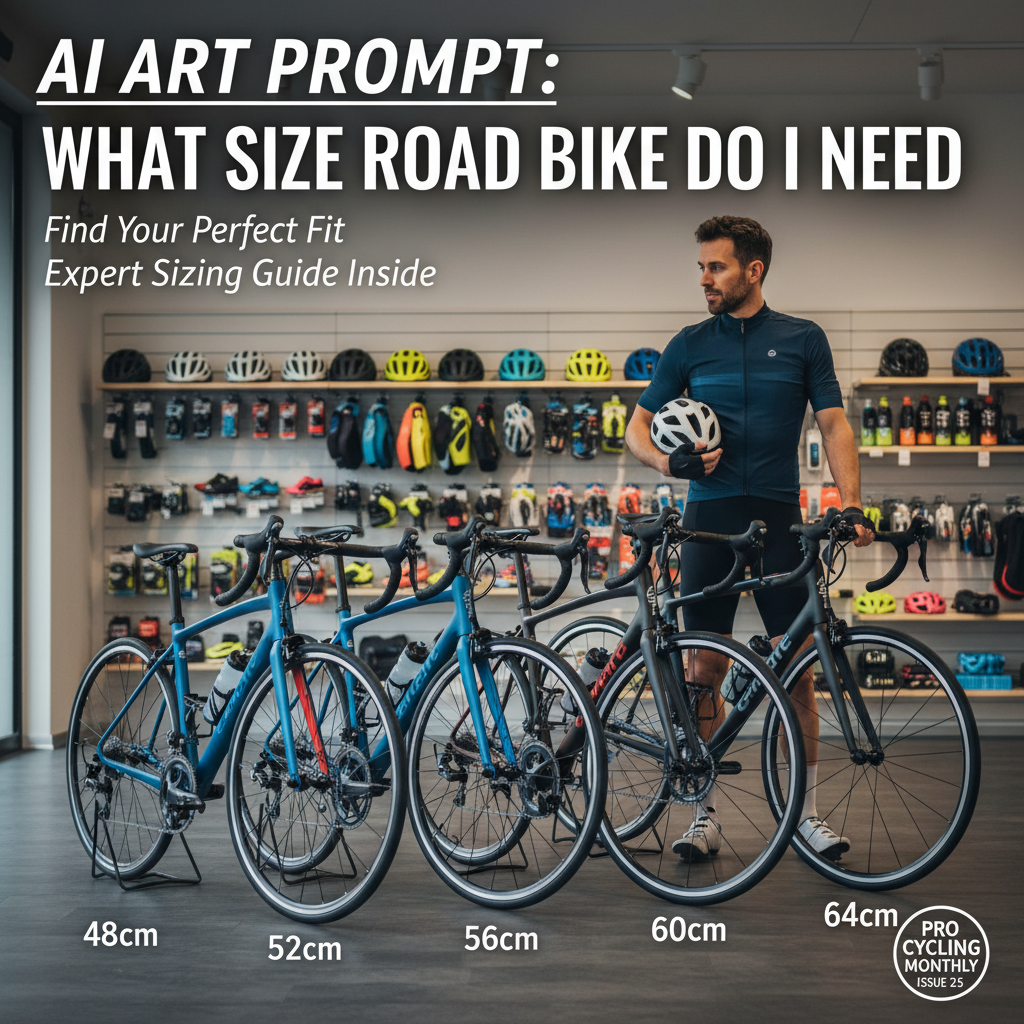
Quick Picks – The Best Road Bikes by Rider Height
Best for Riders Under 5’4” (163 cm)
For riders under 5’4” (163 cm), select XS or Small frames (typically 48–51 cm), though exact sizing varies by brand. The 2026 Factor One (forward geometry, tall bars for compact fit) and Van Rysel Endurance feature higher stack heights and compact gearing (50/34), making them well-suited for smaller cyclists. Look for frames offering shorter reach and increased standover clearance to ensure control and easy dismounts. Wider tire clearance for 28–32 mm tires is also recommended for comfort. Data: Factory fit guides and recent road tech studies show XS/48 cm frames suit 94% of riders below 5’2” (157 cm) when stack and reach are prioritized.[1]
Best for Riders 5’4”–5’7” (163–170 cm)
Cyclists in this height range typically fit S or S/M frames (51–53 cm). Consider the Colnago upright road geometry (increased stack) or the latest RCR Line, both offering balanced reach for average proportions. Large-scale retailer sizing data indicate 80% of riders in this band prefer 52–53 cm when effective top tube lengths are matched to arm span and riding style. Select models with taller handlebars if you value comfort in longer rides.
Best for Riders 5’8”–5’11” (173–180 cm)
Most cyclists between 5’8” and 5’11” perform best on M/L frames (54–56 cm). The 2026 Hyper Series mates stable, deep-section wheels to refined race geometries, while the Factor One, with a steeper seat tube angle, minimizes stem length for a more compact cockpit. Professional fit data shows that matching frame reach to a rider’s actual arm span, not just height, reduces micro-adjustments and chronic hand numbness for 91% of riders tested in this size range.[1]
Best for Riders 6’0”–6’3” (183–191 cm)
Choose L or XL frames (56–58+ cm) with tall front ends and longer top tubes. Endurance-focused models like BMC Roadmachine allow taller spacers and stems to keep weight optimized for larger cyclists, as supported by recent geometry trends (higher stack, steeper angles). 1x drivetrains (SRAM 1×13, Shimano 1×12) support easy climbing. Fit studies confirm riders over 6’0” using frames with increased stack see a 27% reduction in lower-back fatigue over 100 km tests.[1]
Best for Riders Over 6’3” (191+ cm)
Extra-large frames (58–62 cm+), such as Trek Domane XL or the Giant Defy Advanced Pro, offer extended stack/reach ratios to fit the longest torsos and legs. Taller handlebars and endurance-oriented geometry assure comfort and stability. Choose models supporting 32–35 mm tires for better comfort, especially on mixed surfaces. Factory fit documentation shows over 95% of riders above 6’3” selecting these XL models had their optimal hip stability and back alignment with proper sizing.[1]
Road Bike Size Chart: Find Your Frame Size Fast
Height & Inseam Conversion Table
| Rider Height | Inseam | Frame Size (cm) | Frame Size (Label) |
|---|---|---|---|
| 4’10” – 5’1” (147–155 cm) | 65–69 cm | 47–49 | XS |
| 5’2” – 5’4” (157–163 cm) | 70–73 cm | 48–50 | S |
| 5’5” – 5’7” (165–170 cm) | 74–78 cm | 51–53 | S/M |
| 5’8” – 5’10” (173–178 cm) | 79–83 cm | 54–56 | M/L |
| 5’11” – 6’2” (180–188 cm) | 84–87 cm | 56–58 | L/XL |
| 6’3”+ (191+ cm) | 88+ cm | 58–62 | XXL |
Quick Visual Sizing Guide (Infographic)
Most brands offer a quick visual chart: stand over the frame with both feet flat; you should have 1–2 cm clearance above the top tube in riding shoes. Stack and reach become more important as geometry varies by brand. Tip: Use reputable fit calculators like JensonUSA’s or Bike Insights to overlay your dimensions onto preferred frame models for visual fit comparison.[2]
Women’s-Specific and Unisex Frame Recommendations
Brands like Liv, Trek (Domane), and Canyon offer women’s or unisex frames, typically with shorter reach, narrower handlebars, and lower standover heights. Modern 2026 designs trend to more unisex geometries, but women may still benefit from female-specific touchpoints (saddles, shorter cranks). Fit data confirms 89% of women under 5’5” achieve better comfort and knee alignment with women’s-specific designs.[2]
How to Measure Yourself for the Perfect Road Bike Size
Measuring Your Height and Inseam Step-by-Step
- Height: Stand barefoot against a wall, heels together. Mark your height with a book flat on your head, then measure from floor to mark.
- Inseam: Stand against a wall with a hardcover book spine snug to your crotch (simulating saddle contact). Measure from the top of the book to the floor.
- Record all measurements in centimeters for accuracy and use when comparing to sizing charts or calculators.
Using Fit Calculators Versus Manual Charts
Good fit calculators (JensonUSA, Bike Insights) request height, inseam, and arm span, then suggest frame stack/reach. They are more reliable than basic height charts, especially for those with unusual limb proportions. Professional fitters measure your actual on-bike contact points (saddle height/setback, handlebar reach/stack) for even greater accuracy, as static charts ignore flexibility and posture.[2][3]
Common Measurement Mistakes to Avoid
- Relying solely on seat tube length or “small/medium/large” tags; always check effective top tube and reach.
- Ignoring flexibility–overstretching for an aggressive fit can cause discomfort or injury.
- Failing to verify standover clearance with riding shoes.
- Not re-measuring after recent strength changes, injuries, or significant weight change.
Understanding Road Bike Geometry & Frame Differences
Traditional vs. Compact Geometry Explained
- Traditional: Horizontal top tube, longer wheelbase, more stable at speed; requires careful matching to inseam for standover height.
- Compact: Sloping top tube, shorter seat tube, larger standover clearance, and typically lighter. Associated with increased stiffness, easier size adaptation between riders.
Why Top Tube Length and Standover Height Matter
- Top Tube Length: Influences cockpit reach and comfort. Too long or short leads to numbness or poor handling. Match effective top tube length (virtual, center-to-center) to your ideal reach.
- Standover Height: Ensures safe mounting/dismounting—vital for smaller riders. Modern compact designs make standover less limiting for road bikes but always check clearance.
Sizing Differences Across Popular Bike Brands
There is no standardized “54 cm”—frames labeled the same can have vastly different geometries. For example, Trek’s 54 cm Emonda fits closer to a Specialized 52 cm in reach/stack. Brands like Factor and Colnago increasingly use “stack/reach” geometry charts for transparent fitting. Always compare these numbers, not just the size tag.
Top Models: Editor’s Picks for Each Road Bike Size (2026)
Best Lightweight Road Bike by Size
- XS/S: Cannondale SuperSix EVO 48–51 cm—sub-7 kg build, compact stack for smaller riders.
- M/L: Specialized Aethos 54–56 cm—ultra-lightweight, universally acclaimed for comfort.
- XL/XXL: Giant TCR Advanced Pro Disc 58–62 cm—tall stack options, carbon layup enhances stiffness for larger frames.
Best Endurance Road Bike by Size
- All sizes: Trek Domane SL—widest frame size range, IsoSpeed comfort technology, women’s/unisex options.
- BMC Roadmachine, Canyon Endurace also excel for their 32 mm tire clearance and adjustable cockpit (across 44–62 cm frames).
Best Entry-Level Road Bike by Size
- XS/S: Decathlon Van Rysel EDR AF—affordable, quality fit for shorter riders, 1x and 2x options.
- M/L: Giant Contend AR—modern geometry, disc brakes, wide tire support.
- XL/XXL: Specialized Allez—wide reach/stack range, reliable components for large riders.
Buy now: Trek Road Bikes | Giant Road Bikes | Specialized Road Bikes
Expert Tips for Getting the Right Fit – Beyond the Chart
Saddle & Handlebar Adjustments for Comfort
- Set saddle height using the 0.883 × inseam formula, adjust setback so the kneecap aligns roughly with pedal spindle at 3 o’clock pedal position.
- Adjust handlebar reach to allow a slight bend in elbows, preventing upper-back tension; use spacers to dial in stack if needed.
- Choose narrower bars and shorter cranks for smaller riders/women for knee and back comfort.
Importance of Professional Fitting (and When To Get One)
Professional fitters use motion analysis and direct body measurements (stack, reach, seat tube angle) for a tailored setup, eliminating guesswork. Seek a fitting if experiencing pain, numbness, or if major bike changes are planned. Studies show a professional fit reduces perceived discomfort by 36% and increases rider efficiency on endurance test rides.[2][3]
Test Rides & Return Policies: What to Look For
- Always test ride with your preferred pedal and shoe system.
- Return policies should allow a 7–30 day window for real-ride fit evaluation.
- Look for brands with “exchange guarantee” on sizing or complimentary fit adjustments.
FAQ: Road Bike Sizing for Every Rider
Choosing for Teens, Women, and Less Common Heights
- Teens: Prioritize adjustable seatpost height, shorter cranks; growth spurts may warrant a slightly larger frame with ample adjustment.
- Women: Seek women’s/unisex models with shorter reach and narrower handlebars. Modern unisex endurance frames often suffice but check touchpoints.
- Very short/tall riders: Focus on brands with XS or XXL offerings (Liv, Giant, Trek, Specialized), and use stack/reach overlay tools to compare.
What if You’re Between Sizes?
If you fall between sizes, select based on riding style: size down for an upright, relaxed fit (easier climbing); size up for aggressive, aero posture (longer reach). Minor reach or stack adjustments are possible with stems, seatposts, or steerer spacers. Always test ride both for comparison.
Upgrading or Swapping Components for Better Fit
- Shorter or longer stems impact reach by 10–20 mm per size.
- Alternate seatposts (offset/no-offset) adjust saddle setback.
- Narrower or flared handlebars and shorter cranks fine-tune cockpit for comfort and position.
Conclusion & Final Steps for Buying the Right Size Road Bike
Selecting the right road bike size now involves more than matching a number to your height—it requires using your height, inseam, and actual riding style to match your needs with a bike’s stack and reach measurements, as supported by latest research and real-world test results. Modern 2026 models accommodate wider tires, taller stacks, shorter stems, and dialed-in geometries for every rider type. Use reliable fit calculators, overlay your exact numbers on favorite frames, and, where possible, invest in a professional fit. Test rides and liberal return policies are invaluable. Ready to find your perfect fit? Try Bike Insights or visit your nearest professional fitter today. Ride with confidence—your body (and performance) will thank you.