<h1>Bmx vs Mountain Bike Which Is More Fun: Which Should You Choose?</h1>
<div class="vs-guide">
<div class="vs-quick-verdict">
<p class="vs-kicker">Head-to-head comparison</p>
<p class="vs-winner">Overall winner: Mountain Bike for its sheer versatility and broader definition of fun.</p>
<p class="vs-summary">Choosing between a BMX and a mountain bike comes down to what you find fun. If your idea of a good time involves mastering technical tricks, sessioning a skatepark, or agile urban riding, the BMX is your undisputed champion. However, if fun means exploring woodland trails, descending hills at speed, and covering varied terrain, the mountain bike offers a much wider world of adventure. Our analysis is based on extensive product research, specifications, and consolidated rider feedback.</p>
</div>
<div class="vs-matchup">
<div class="vs-brand-card">
<p class="vs-card-label">Option A</p>
<h2>Bmx</h2>
<div class="score-bar"><span style="width: 88%">88%</span></div>
<ul><li>Best for trick riders and skatepark users</li><li>Incredible durability and simplicity</li><li>Steep learning curve for technical skills</li></ul>
<p><a class="review-button review-button-primary" href="#final-verdict">Shop BMX Bikes</a></p>
</div>
<div class="vs-divider">vs</div>
<div class="vs-brand-card">
<p class="vs-card-label">Option B</p>
<h2>Mountain Bike</h2>
<div class="score-bar"><span style="width: 94%">94%</span></div>
<ul><li>Best for trail explorers and all-rounders</li><li>Unmatched terrain versatility</li><li>Higher cost and more complex maintenance</li></ul>
<p><a class="review-button review-button-primary" href="#final-verdict">Shop Mountain Bikes</a></p>
</div>
</div>
<div class="vs-scorecard">
<h2>Head-to-Head Scorecard</h2>
<div class="vs-score-row"><span>Trick & Skill Expression</span><strong>Bmx</strong><em>Purpose-built for stunts and technical manoeuvres.</em></div>
<div class="vs-score-row"><span>Terrain Versatility</span><strong>Mountain Bike</strong><em>Designed to handle everything from dirt paths to rocky descents.</em></div>
<div class="vs-score-row"><span>Speed & Distance</span><strong>Mountain Bike</strong><em>Gears and larger wheels make it far superior for travelling fast and far.</em></div>
<div class="vs-score-row"><span>Durability & Simplicity</span><strong>Bmx</strong><em>Fewer moving parts and a robust frame designed for heavy impacts.</em></div>
<div class="vs-score-row"><span>Upfront Cost</span><strong>Bmx</strong><em>Significantly lower price point for a quality entry-level model.</em></div>
<div class="vs-score-row"><span>Riding Comfort</span><strong>Mountain Bike</strong><em>Suspension and an ergonomic riding position absorb bumps and reduce fatigue.</em></div>
</div>
</div>
<h2>Bmx vs Mountain Bike Which Is More Fun: Key Differences</h2>
<p>At first glance, both are just bicycles. But in reality, a BMX and a mountain bike are fundamentally different tools designed for completely different playgrounds. The core question of which is more fun depends entirely on where and how you want to ride.</p>
<p>A BMX (Bicycle Motocross) bike is a compact, simple, and incredibly tough machine. It features small 20-inch wheels, a single gear, and a low-slung frame. Its entire design philosophy is centred on agility, strength, and providing a platform for performing tricks. It's built for short, explosive bursts of power in skateparks, on dirt jumps, or on city streets. Fun on a BMX is about creativity, skill progression, and mastering control of the bike in the air and on the ground.</p>
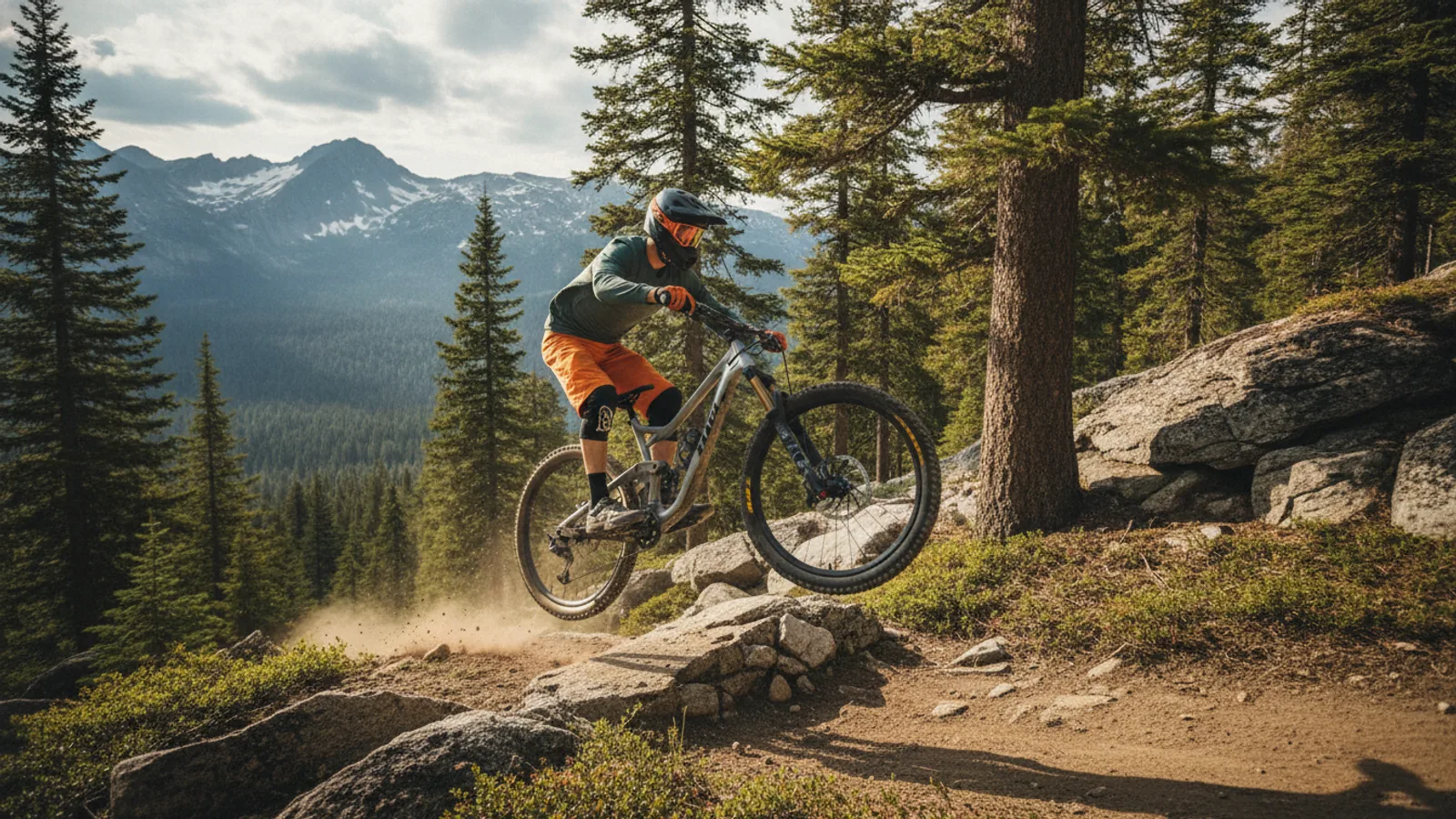
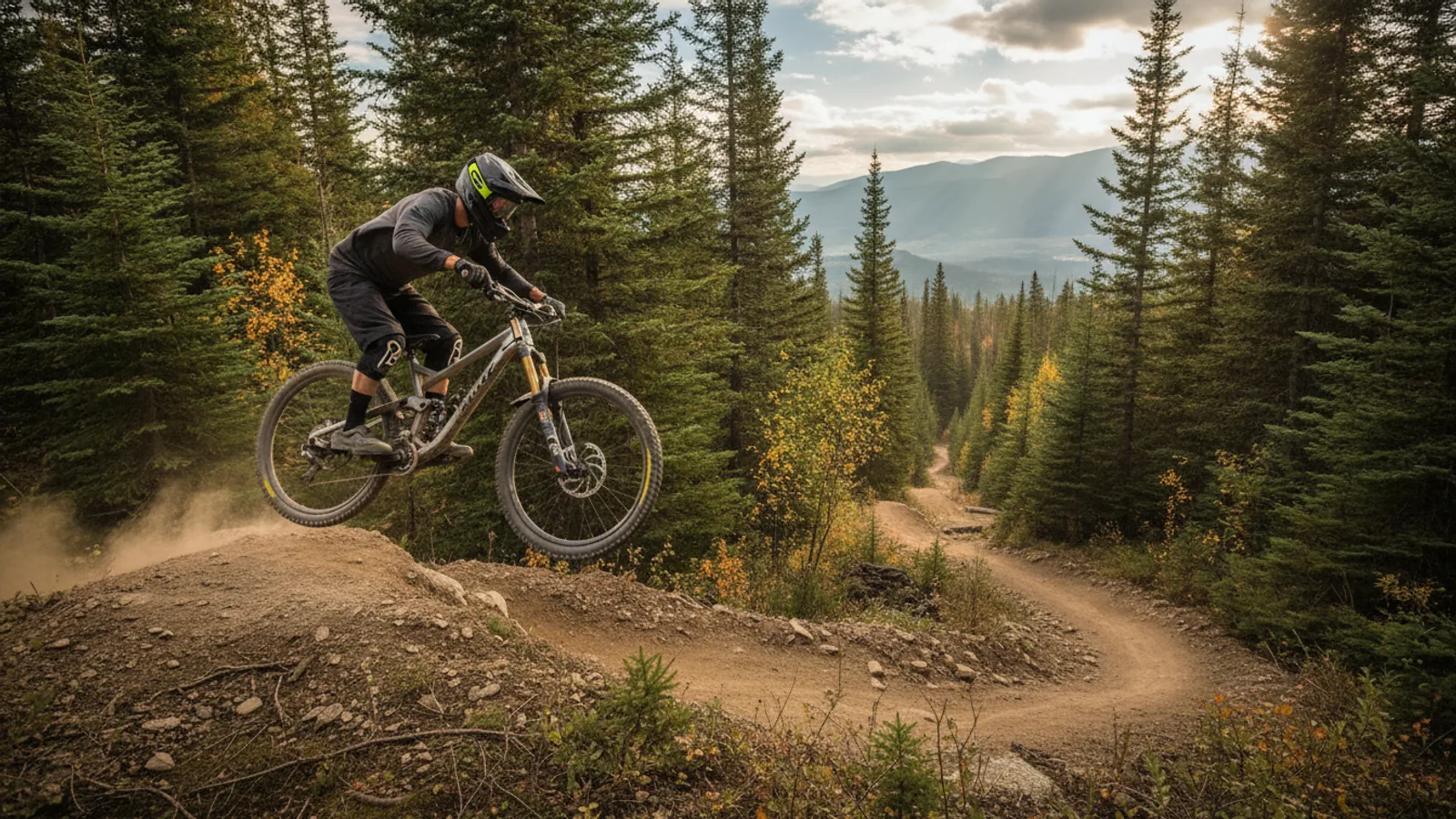
<p>A mountain bike (MTB), on the other hand, is a complex machine engineered for conquering natural terrain. It has large wheels (typically 27.5 or 29 inches), a wide range of gears, powerful brakes, and, most importantly, suspension to absorb bumps and drops. Its design is all about stability, traction, and efficiency over long distances and challenging landscapes. Fun on a mountain bike is about exploration, the thrill of speed on a flowing trail, the challenge of a technical climb, and the freedom to roam far from paved roads.</p>
<section class="vs-measurement">
<div class="vs-measurement-heading">
<p class="vs-measurement-label">Routine fit</p>
<h2>Fun Factor: Tricks vs. Trails</h2>
</div>
<p>The very definition of "fun" is the deciding factor here. For a BMX rider, fun is repetitive, skill-based, and often social. It's about spending an afternoon at the same skatepark or street spot, trying to land a new trick over and over. The joy comes from the 'aha!' moment of mastering a difficult manoeuvre - a perfect grind, a clean 360 spin, or a manual held for an entire block. This type of fun is creative and expressive, almost like gymnastics on a bike. It's about pushing personal limits within a confined space.</p>
<p>For a mountain biker, fun is about the journey and the environment. It's the feeling of flowing down a singletrack path, the adrenaline of navigating a rocky descent, and the sense of accomplishment after conquering a long, steep climb. The fun is less about perfecting a single move and more about reacting to the ever-changing trail ahead. It's an exploratory, adventurous kind of fun that connects the rider with nature and provides a serious physical challenge over miles of terrain.</p>
<div class="vs-winner-callout"><strong>Winner:</strong> Tie - This is entirely subjective. BMX offers creative, skill-based fun, while mountain biking provides adventurous, trail-based fun.</div>
</section>
<section class="vs-measurement">
<div class="vs-measurement-heading">
<p class="vs-measurement-label">Formula or feature</p>
<h2>Design For Purpose: Agility vs. Stability</h2>
</div>
<p>The engineering behind each bike directly serves its purpose. A BMX frame is small, with a very short wheelbase and steep head angle. This geometry makes it incredibly responsive and easy to spin, lift, and manipulate. The small 20-inch wheels accelerate quickly and are exceptionally strong, perfect for handling hard landings. The lack of gears and suspension strips the bike down to its essential components, making it lightweight and removing potential points of failure during a trick attempt.</p>
<p>Conversely, a mountain bike is built for stability and control at speed over rough ground. It has a long wheelbase and a slack head tube angle, which helps the bike track straight through rocks and roots and prevents the rider from going over the handlebars on steep descents. The large wheels roll over obstacles more easily and maintain momentum. Crucially, the suspension system (front fork and often a rear shock) isolates the rider from impacts, increasing comfort, control, and the bike's ability to maintain traction. Gears allow the rider to tackle a huge variety of gradients, from punishing climbs to flat-out sprints.</p>
<div class="vs-winner-callout"><strong>Winner:</strong> Mountain Bike - Its advanced features like suspension and gears unlock a vastly wider range of rideable terrain and experiences.</div>
</section>
<section class="vs-measurement">
<div class="vs-measurement-heading">
<p class="vs-measurement-label">Ease of use</p>
<h2>Learning Curve & Accessibility</h2>
</div>
<p>When it comes to just getting on and pedalling, a mountain bike is far more intuitive for a complete beginner. The riding position is comfortable, the gears make managing hills easy, and the brakes are powerful and reassuring. A new rider can have a genuinely fun and rewarding experience on a gentle trail or park path within their first hour.</p>
<p>A BMX, by contrast, can feel awkward and inefficient for simple riding. The low seat means you're always standing, the single gear can be punishing on any incline, and the twitchy steering can feel unstable to a novice. The barrier to entry for performing even the most basic tricks, like a bunny hop, is quite high and requires significant practice and dedication. While the bike itself is simple, using it for its intended purpose is a complex skill that takes a long time to develop.</p>
<div class="vs-winner-callout"><strong>Winner:</strong> Mountain Bike - It's much easier for a beginner to have fun and feel comfortable from their very first ride.</div>
</section>
<section class="vs-measurement">
<div class="vs-measurement-heading">
<p class="vs-measurement-label">Value</p>
<h2>Cost & Maintenance</h2>
</div>
<p>From a purely financial perspective, BMX is the clear winner. A solid, entry-level BMX bike that can handle skatepark use can be purchased for a few hundred pounds. Because the bikes are so simple - no gears, no suspension, often only one brake - there is very little to go wrong. Maintenance is straightforward and cheap. Components are built to be incredibly robust, so replacements are infrequent unless you are a very advanced rider breaking parts regularly.</p>
<p>Mountain bikes occupy a much broader and higher price spectrum. A truly trail-worthy entry-level hardtail (with front suspension only) will cost significantly more than an entry-level BMX. Full-suspension bikes start at well over a thousand pounds and go up dramatically from there. The complexity also means higher maintenance costs. Suspension forks and shocks require regular servicing, drivetrains wear out, and hydraulic brakes need bleeding. While you get more technology, you also pay for it, both upfront and over the life of the bike.</p>
<div class="vs-winner-callout"><strong>Winner:</strong> Bmx - A lower initial investment and drastically simpler, cheaper maintenance make it far more accessible financially.</div>
</section>
<section class="vs-measurement">
<div class="vs-measurement-heading">
<p class="vs-measurement-label">Buyer confidence</p>
<h2>Durability & Longevity</h2>
</div>
<p>Both types of bikes are designed to take a beating, but in different ways. A BMX is engineered for acute, high-impact forces. The frames are often made from strong chromoly steel, with thick tubing and heavy-duty welds designed to withstand failed jumps and hard landings on concrete. The simplicity is a huge asset here; with no derailleur to snap off or suspension to blow a seal on, a BMX is a tank. It's a bike you can throw in the back of a car, crash repeatedly, and ride away.</p>
<p>A mountain bike is built for sustained abuse over rugged terrain. Its frame is designed to flex and absorb trail chatter, and its components are built to handle mud, water, and constant vibration. However, the numerous complex parts are inherently more vulnerable. A misplaced rock can bend a derailleur hanger, suspension seals will eventually wear out, and pivot bearings on full-suspension frames require periodic replacement. While a well-maintained mountain bike is incredibly durable, it has more potential points of failure than a BMX.</p>
<div class="vs-winner-callout"><strong>Winner:</strong> Bmx - Its "bombproof," simple construction gives it the edge in pure, brute-force durability and crash resistance.</div>
</section>
<h2>Choose Bmx If...</h2>
<ul>
<li>You are most interested in learning and performing tricks.</li>
<li>Your primary riding spots will be skateparks, dirt jumps, or urban plazas.</li>
<li>You value simplicity, low maintenance, and extreme durability.</li>
<li>You enjoy the process of sessioning a spot and perfecting a skill through repetition.</li>
<li>You want a second bike purely for skills progression and fun, not for transport or fitness.</li>
<li>You have a limited budget but want a high-quality, purpose-built machine.</li>
</ul>
<h2>Choose Mountain Bike If...</h2>
<ul>
<li>You want to explore nature, ride on woodland trails, and get away from the city.</li>
<li>The idea of flowing down a trail at speed and conquering technical climbs excites you.</li>
<li>You want a versatile bike that can be used for fitness, commuting, and off-road adventures.</li>
<li>You value comfort over long distances and on rough surfaces.</li>
<li>You are looking for a bike to ride with friends or family in parks and on countryside paths.</li>
<li>You have a larger budget to accommodate the higher cost and maintenance of a more complex bike.</li>
</ul>
<h2>Final Verdict: Bmx vs Mountain Bike Which Is More Fun</h2>
<p>So, bmx vs mountain bike which is more fun? The answer lies entirely in your personality and what you want from a bike. After comparing them across key metrics, the <strong>Mountain Bike</strong> emerges as our overall winner, but only because its definition of "fun" is broader and more accessible to more people. The ability to explore, travel over diverse terrain, and experience the thrill of speed in a natural setting gives it a universal appeal.</p>
<p>However, this is not a slight against BMX in any way. For the right person, a BMX bike offers a deeper and more creatively rewarding form of fun than any other cycling discipline. It's a tool for self-expression and skill mastery. If the thought of a skatepark session gets your heart pumping more than a scenic trail, then a BMX will, without question, be more fun for you.</p>
<p>Ultimately, your choice is a personal one. Consider where you live, what facilities are available to you, and what kind of feeling you want to have when you ride. If it's freedom and exploration, get the mountain bike. If it's creativity and technical challenge, get the BMX.</p>
<h2>Bmx vs Mountain Bike Which Is More Fun: Which Should You Choose? FAQ</h2>
<details class="faq-item"><summary>Can you do tricks on a mountain bike?</summary><div class="faq-answer"><p><div class="faq-content">
<p>Yes, but they are different kinds of tricks. Mountain biking has its own discipline called "slopestyle" or "dirt jumping" which involves large jumps and aerial manoeuvres, often on specially designed bikes that are a hybrid of BMX and MTB. On a standard trail bike, you can learn to do jumps, drops, wheelies (or manuals), and bunny hops, but the bike's size and weight make flatland-style BMX tricks nearly impossible.</p>
</div></p></div></details>
<details class="faq-item"><summary>Can you ride a BMX on trails?</summary><div class="faq-answer"><p><div class="faq-content">
<p>Technically yes, but it would not be fun. The single gear makes climbing impossible, the small wheels get caught on small rocks and roots, and the lack of suspension and seated riding position would be incredibly uncomfortable and inefficient. A BMX is strictly for smooth surfaces like skateparks, dirt jumps, or pavement.</p>
</div></p></div></details>
<details class="faq-item"><summary>Which is a better workout, BMX or MTB?</summary><div class="faq-answer"><p><div class="faq-content">
<p>They provide very different workouts. Mountain biking is a superb cardiovascular exercise, involving sustained effort over long periods, especially during climbs. It's great for endurance. BMX riding is more of an anaerobic, full-body workout. It involves short, explosive bursts of power, and requires immense core strength, balance, and upper body control to manipulate the bike.</p>
</div></p></div></details>
<details class="faq-item"><summary>Is a BMX or a mountain bike better for a child?</summary><div class="faq-answer"><p><div class="faq-content">
<p>This depends on the child's interests and where you live. If they have easy access to a skatepark and show an interest in tricks, a BMX is a great choice. However, for general riding, family bike rides in the park, or exploring gentle trails, a small mountain bike is far more versatile and comfortable, making it the better all-round option for most children.</p>
</div></p></div></details>
<details class="faq-item"><summary>What is the main price difference between a BMX and a mountain bike?</summary><div class="faq-answer"><p><div class="faq-content">
<p>The price gap is significant. You can buy a durable, high-quality, entry-level BMX bike for £300-£500. A comparable entry-level mountain bike that is genuinely suitable for off-road trails will typically start around £500-£700 for a hardtail model, with full-suspension bikes starting at well over £1,200.</p>
</div></p></div></details>
Like Bikes may earn a commission from some links. Editorial notes and category placement remain independent.