
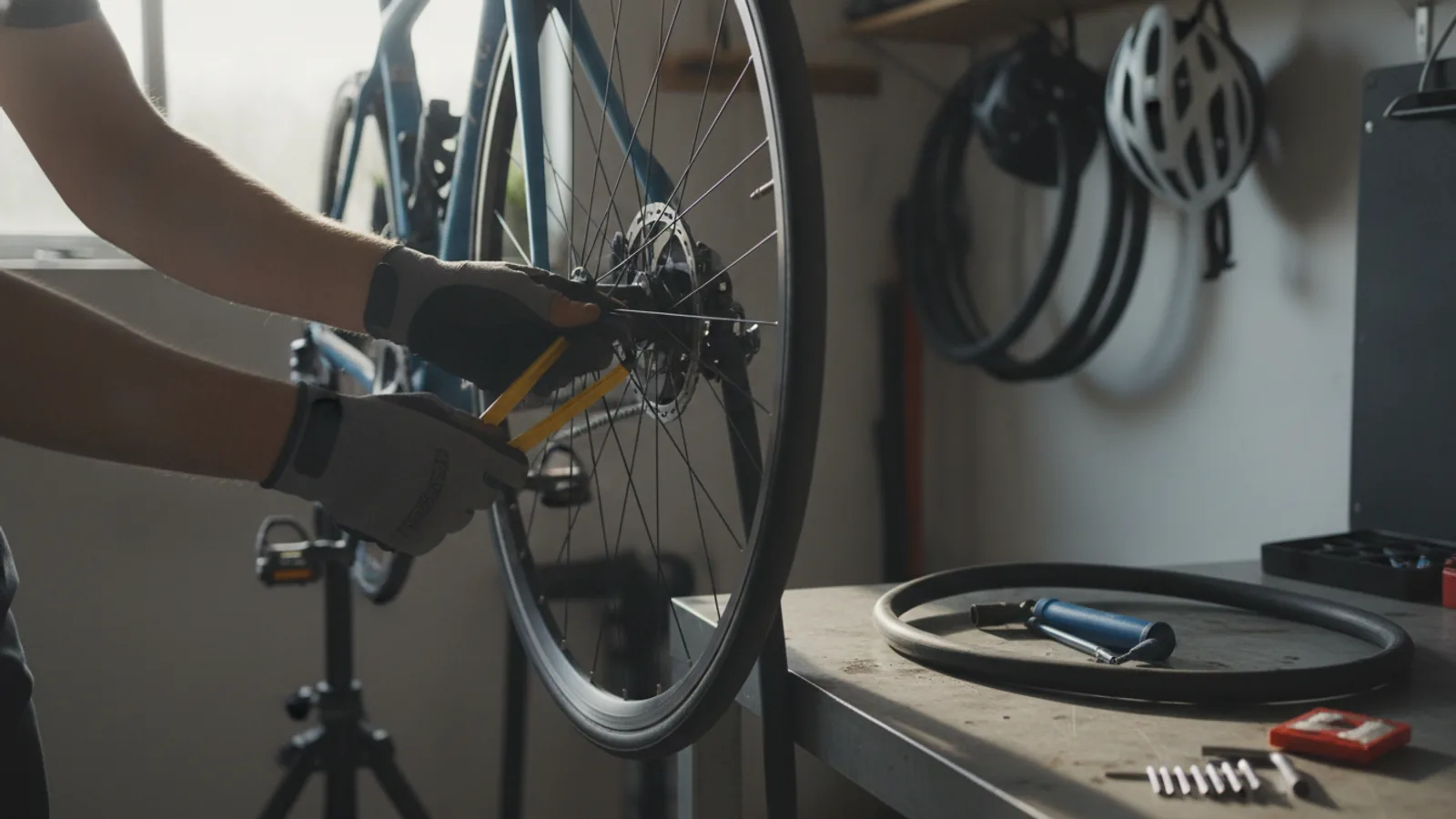
How Do You Change A Bike Tyre
This guide explains how to approach how do you change a bike tyre, including the preparation, practical steps, common mistakes, and final checks that help you finish with confidence.
Before You Start
Gathering the right tools and checking your new inner tube beforehand makes the entire process much smoother. A little preparation prevents common frustrations like discovering your pump doesn't fit or your new tube is the wrong size.
What You Need
Step-by-Step Instructions
Quick Reference
Common Problems When You Change A Bike Tyre
Even with clear instructions, you might run into a few snags. Here are the most common issues and how to solve them.
Pinch Flats or "Snake Bites"
This is when the new inner tube gets pinched between the tyre bead and the wheel rim during installation. When you inflate it, the pressure immediately ruptures the tube, often creating two small holes that look like a snake bite. The best way to prevent this is to partially inflate the tube before installing to give it shape, and to visually inspect both sides of the wheel before inflating to full pressure, ensuring no tube is visible.
Breaking Tyre Levers
Cheap, flimsy tyre levers can snap, especially when dealing with a tight tyre and rim combination. This is incredibly frustrating on a roadside repair. Always invest in a set of sturdy, good-quality plastic levers from a reputable cycling brand. If a tyre is extremely tight, focus on technique rather than brute force. Pushing the bead into the central channel of the rim is always the best solution.
Damaging the Valve Stem
The valve stem can be torn from the rest of the inner tube if you're not careful. This often happens when pulling the old tube out too aggressively or if the tyre slips on the rim under heavy braking (a result of low tyre pressure). When installing, ensure the valve goes into the rim straight, and avoid using it as a handle to pull the tyre around.
Advanced Tips for Changing A Bike Tyre
Once you've mastered the basics, these tips can make the process faster and more reliable.
Using Talcum Powder
A light dusting of talcum powder on a new inner tube before installation can work wonders. It acts as a dry lubricant, preventing the rubber tube from sticking to the inside of the tyre. This makes it easier to position the tube correctly and reduces the risk of it getting twisted or pinched.
Patching an Inner Tube
Instead of throwing away a punctured tube, you can repair it with a patch kit. A good kit contains sandpaper to roughen the surface, vulcanising solution (glue), and patches. It's a cost-effective and environmentally friendly option, and a patched tube is just as reliable as a new one. Carrying a patch kit is also a great lightweight backup for long rides.
Understanding Tyre Pressure
Don't just inflate your tyre until it feels hard. The pressure range on the sidewall is a guide, and the optimal pressure for you depends on your weight, tyre width, and riding conditions. A heavier rider needs more pressure, while a wider tyre needs less. Experimenting within the recommended range can significantly improve your bike's comfort and grip.
How Do You Change A Bike Tyre FAQ
Can I use any inner tube for my bike?
No. The inner tube must match three things: the wheel diameter (e.g., 700c, 26", 29"), the tyre width range (e.g., 23-28c), and the valve type your rim is drilled for (Presta or Schrader). All this information is printed on your tyre's sidewall and on the inner tube's box.
How often should I change my bike tyres?
You should change the tyre itself (not the inner tube) when it's worn out. Signs of wear include a flattened or squared-off tread profile, visible threads or casing showing through the rubber, deep cuts, or cracks appearing in the sidewalls. Frequent punctures can also be a sign that the tyre is too thin and needs replacing.
What is the difference between Presta and Schrader valves?
A Schrader valve is wider, with a central pin, and is the same type used on car tyres. A Presta valve is thinner and has a small locknut at the tip that you must unscrew before you can inflate it. They are not interchangeable; your wheel rim will be drilled to fit one or the other.
Can I ride on a flat tyre?
You should avoid this at all costs. Riding on a flat tyre, even for a short distance, can permanently damage your wheel rim, which is a much more expensive and difficult repair than changing a tyre. It's also extremely unstable and dangerous.
Final Checklist for Changing A Bike Tyre
Before you ride off, run through this quick final check to ensure everything is perfect.