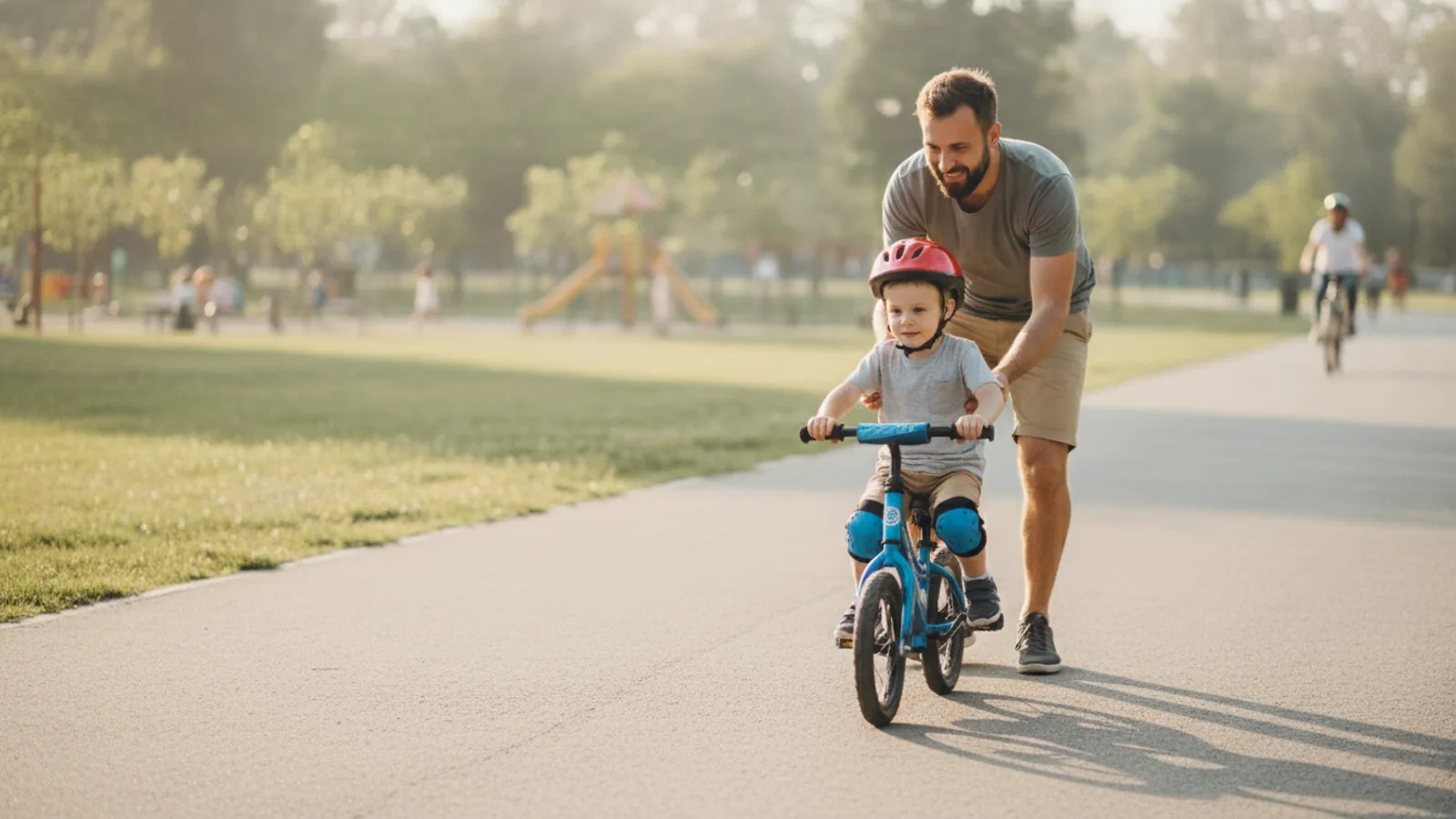
How To Teach A Kid To Ride A Bike
This guide explains how to approach how to teach a kid to ride a bike, including the preparation, practical steps, common mistakes, and final checks that help you finish with confidence.
Before You Start
Success starts with the right setup. Having the correct gear and mindset before you even head out the door will make the entire process smoother, safer, and more enjoyable for everyone involved.
Step-by-Step Instructions
Quick Reference
Common Problems When You Teach A Kid To Ride A Bike
The Stabiliser Trap
Many of us learned with stabilisers, but they are now widely understood to be counterproductive. Stabilisers prevent a bike from leaning, which is essential for steering and balancing. They teach a child to ride a tricycle, not a bicycle. A child who relies on them has to un-learn bad habits and then learn balance from scratch. The balance-first method outlined above skips this frustrating step entirely.
Overcoming Fear and Frustration
It's perfectly normal for a child to be scared. Acknowledge their fear rather than dismissing it. Say, "I know it feels wobbly, that's okay." Reassure them by staying close, but try not to hold onto them or the bike. Your calm presence is often enough. If frustration builds, it's a clear sign to stop. End the session with something they can do well, like a fast scoot, and try again another day. Pushing through tears is rarely effective.
Difficulty with Pedalling
Some children get confused by the pedalling motion, often trying to pedal backwards (which may engage a coaster brake) or forgetting to keep pedalling. If this happens, you can lift the back wheel of the bike off the ground and let them practise pedalling with their hands or feet to understand the forward motion without having to worry about balance at the same time.
The dreaded "I give up!"
Almost every child will hit a point where they feel like giving up. This is where your role as a coach is most important. Keep your language positive and focus on effort, not just results. Phrases like "That was a great try!" or "Look how far you glided that time!" are more effective than "You've almost got it." Short, frequent sessions are much better than one long, draining one.
Advanced Tips for a New Rider
Once your child is confidently pedalling, stopping, and starting on flat ground, you can introduce a few new skills to make them a safer and more capable rider.
- Effective Braking: Teach them to use both brakes together, squeezing them gently rather than grabbing them. Practise emergency stops in a safe area so they know how it feels to stop quickly without skidding.
- Riding on Different Surfaces: Once they've mastered tarmac, let them try riding on short grass or a smooth gravel path. This teaches them how the bike handles differently on various terrains.
- Navigating Slopes: Find a very gentle uphill slope to help them practise pedalling with more power. A gentle downhill slope is great for learning to control their speed with the brakes.
- Looking and Signalling: Teach them the importance of looking over their shoulder before turning or stopping. Once they are stable, you can introduce basic hand signals for turning left and right.
How To Teach A Kid To Ride A Bike FAQ
What is the best age to teach a child to ride a bike?
There is no perfect age, as children develop at different rates. Readiness is more important than age. Most children have the necessary coordination and strength between the ages of 4 and 6. The key indicators are their interest in learning and their ability to follow simple instructions.
Should I hold onto the saddle or handlebars?
It's tempting, but holding the bike disrupts the child's ability to feel and correct their own imbalances. A light, reassuring hand on their back or shoulder is a better alternative, as it lets them feel your presence without interfering. Your goal should be to be hands-off as quickly as possible.
Is it better to learn on grass or pavement?
Pavement (or tarmac) is almost always better. While grass seems safer because it's softer, its high rolling resistance makes it very difficult to get the speed needed for gliding and balancing. A smooth surface allows the bike to roll easily, making the whole process less effortful and more successful.
How long will it take to teach them?
This varies enormously. Using the balance-first method, some children genuinely get it in under an hour. For others, it might take a few short sessions spread over a week or two. The most important factor is not to rush. Let the child learn at their own pace, and it will happen.
Final Checklist for Teaching a Kid to Ride
Before, during, and after, keep these key points in mind for a successful lesson.
- Bike Fit: Saddle is low enough for feet to be flat on the ground (for the gliding phase).
- Safety First: Helmet is fitted correctly and worn at all times.
- Pedals Off: Start by removing the pedals to create a balance bike.
- Master Gliding: Don't proceed to the next step until they can glide confidently with their feet up.
- Pedals On: Re-attach pedals and raise the saddle slightly for efficient pedalling.
- Power Start: Use the "2 o'clock" pedal position for the first push-off.
- Look Ahead: Continuously remind them to look up and where they want to go.
- Keep it Fun: Stay positive, offer lots of praise, and know when to take a break.